Callicebus – Titi monkeys
Famous for “tail-holding”: pairs may sit close and wrap their tails around each other like a furry handshake
If you picture a monkey that seems more like a gentle forest neighbor than a loud troublemaker, you’re in the right zone. Titis live in trees across parts of South America and tend to move quickly and carefully, hopping from branch to branch rather than making long, dramatic swings. Their tails are long and very furry, often held out for balance, and while the tail looks wonderfully grabby, titis don’t use it like a hook. Many species have soft, earthy colors—grays, browns, reddish tones—perfect for blending into leaves and shadow.
Many titis are famous for forming strong pair bonds, often living in small family groups that include a bonded adult pair and their young. They’re also known for a sweet-looking behavior that has made them internet-famous among primate fans: two titis will sometimes sit close together and wrap their tails around each other, like a furry handshake. This isn’t just cute—it’s a sign of comfort and social connection. Fathers can be especially hands-on, too, often carrying the infants for long stretches and passing them to the mother mainly for nursing. That kind of teamwork is a big part of why titi families can be so stable in the forest.
The name Callicebus also comes with an interesting twist: scientists have reorganized titi monkeys in recent years, and many species once placed in Callicebus have been moved into other genera. In everyday conversation, people still say “Callicebus titi monkeys,” but depending on the species, you may now see names like Plecturocebus or Cheracebus used in newer guides. The animals themselves didn’t change—just our understanding of how their family tree is arranged. Either way, the “titi” identity remains: rounder faces compared with some other monkeys, thick fur, and a generally calm, cautious way of moving and feeding.

Species in this genus
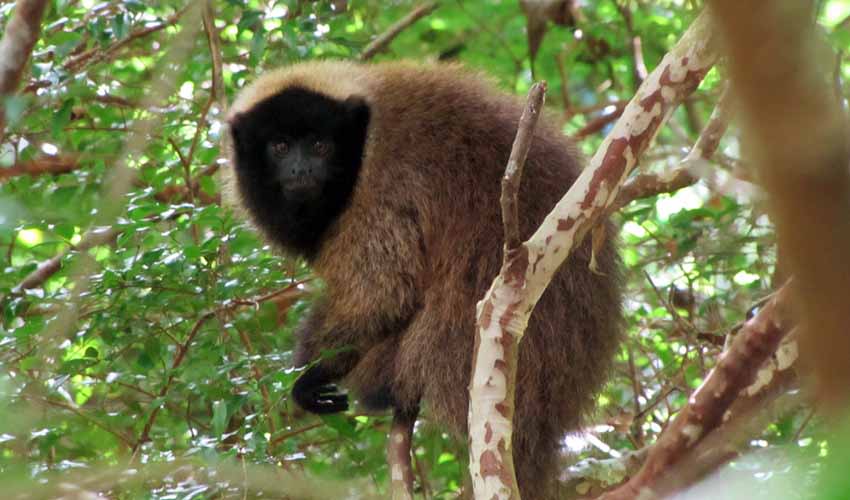


Atlantic titi monkey
Often easier to hear than see—dense Atlantic Forest foliage hides them, but their voices travel

