Hymenolaimus – Blue duck
They’re “torrent ducks” that love fast, rocky, white-water rivers in New Zealand’s forested mountains
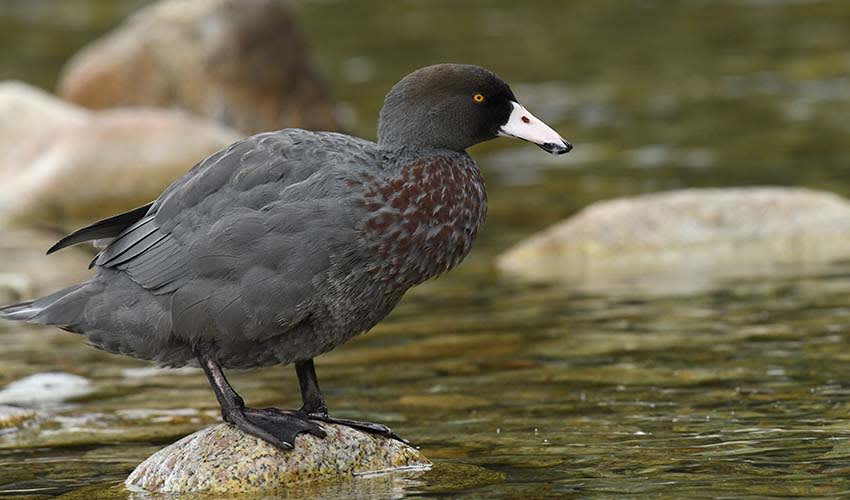
Unlike most ducks, which prefer calm lakes and gentle ponds, the blue duck is a true river specialist, living only on fast-flowing, clear mountain streams. Its slate-blue plumage gives it a soft, smoky look, and its chest is sprinkled with warm rusty spots, almost like freckles. This subtle coloring blends beautifully into the rocky rivers it calls home, helping it stay hidden from predators. The blue duck’s bill is another unmistakable feature—pale pink with small, fleshy lobes near the tip, perfectly designed for scraping food off underwater stones.
What really sets the Whio apart is its incredible white-water lifestyle. blue ducks are built like little river torpedoes: compact, strong, and low to the water, with powerful webbed feet that help them navigate fierce rapids. They can swim upstream through fast currents that would sweep other ducks away, diving and surfacing with ease as they forage. Instead of eating large amounts of plant matter like many other ducks, the Whio feeds mostly on aquatic insect larvae, especially caddisflies and mayflies that cling to submerged rocks. Its specialized bill flaps help it feel and grip prey along the riverbed. This diet means the species is tied closely to the health of mountain streams—clean water and abundant insect life are essential for its survival.
Blue ducks are also known for their strong sense of pair loyalty. Males and females often stay together year-round, guarding the same stretch of river as their territory. These territories can be surprisingly long, sometimes covering several kilometers of winding waterway. The birds patrol their river sections with surprising boldness, chasing off intruding ducks and calling loudly when alarmed. Their vocalizations are just as distinctive as their appearance: the male’s whistle, a sharp “whio!”, is what gave the species its Māori name, while the female answers with a deeper, raspier growl.
Species in this genus


Blue duck
They’re “torrent ducks” that love fast, rocky, white-water rivers in New Zealand’s forested mountains

