Prosopeia – Shining parrots
Each species has its own unique mix of colors, shaped by island isolation
These birds are admired for their glossy feathers, bold color patterns, and strong presence in tropical forests. Shining parrots are medium to large in size, with sturdy bodies, broad wings, and long tails that give them a powerful and confident look. Their plumage often features vivid greens, deep blues, rich reds, and touches of black, which appear almost polished in sunlight, giving rise to the name “shining” parrots. Their strong curved beaks and alert eyes reflect both intelligence and adaptability.
Shining parrots are closely tied to forest habitats, particularly mature tropical forests where tall trees provide food, shelter, and nesting sites. They spend much of their time high in the canopy, moving deliberately between branches in search of fruits, seeds, berries, and blossoms. Their diet makes them important seed dispersers, helping maintain forest health and regeneration. These parrots are strong fliers but are often seen perched quietly, observing their surroundings before moving on
Social structure plays an important role in the lives of Prosopeia parrots. They are usually seen in pairs or small family groups, and mated pairs form strong, lasting bonds. Partners often stay close together while feeding, resting, or flying, showing clear signs of cooperation and attachment. During the breeding season, shining parrots nest in natural cavities in large trees. Both parents are involved in raising the chicks, taking turns feeding and guarding them. The young birds remain dependent on their parents for a long time, learning flight paths and feeding habits before becoming independent.
What sets shining parrots apart from many other parrots is their combination of bold coloring and relatively calm behavior. While their appearance is dramatic, they are not constantly noisy or frantic. Instead, they often move with confidence and purpose, giving them a dignified presence in the forest. Each species within the genus has its own color emphasis and habitat preference, shaped by island life and isolation.

Species in this genus
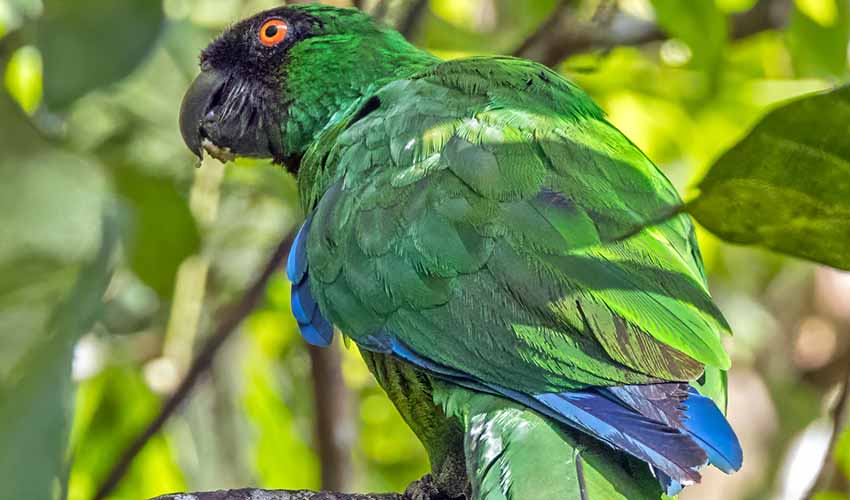


Masked shining parrot
One of the most dramatic-looking parrots in the Pacific
Maroon shining parrot
One of Fiji’s most boldly colored parrots, impossible to miss once spotted

