


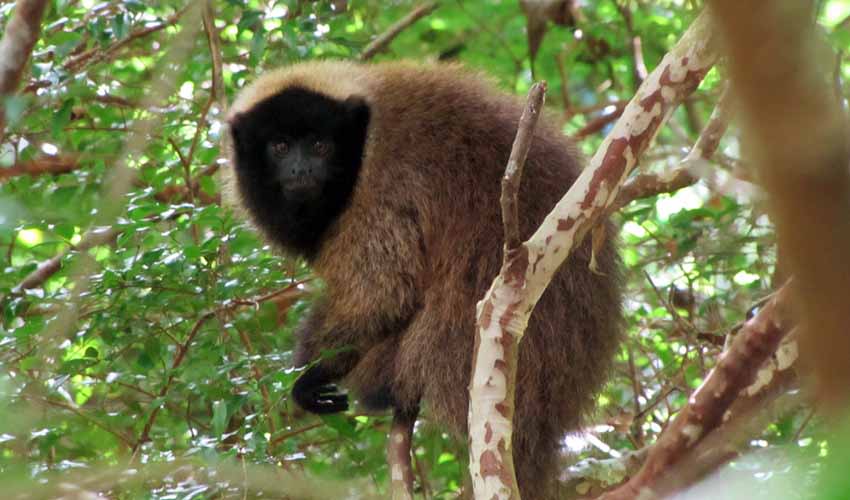
It’s named for its striking face pattern, which can look like it’s wearing a dark mask, and for its thick, fluffy fur that gives it a soft, plush appearance in the treetops. Like other titi monkeys, it has a long, very furry tail used mainly for balance—not for grabbing branches like a hook. It moves through the forest with careful leaps and quick climbs, usually staying well above the ground, where it’s safer and where its food is.
These monkeys often live in small, tight groups built around a bonded adult pair and their young. They’re known for close-contact behaviors that look almost tender: sitting pressed together, grooming, and sometimes twining their tails around a partner’s tail like a furry reassurance. Another standout detail is how involved fathers can be—titi dads are often the main “baby carriers,” keeping the infant with them for much of the day and passing it to the mother mainly for nursing. In a forest where every day involves travel, vigilance, and finding food, that kind of teamwork can make a big difference.
In terms of daily life, Atlantic titis are flexible feeders. Their menu shifts with the seasons, but fruits are a major part of it, along with seeds and leaves. One of the more surprising behaviors reported for them is that they sometimes eat soil, which may help them obtain minerals or neutralize certain plant chemicals. They also communicate a lot through sound. Titi monkeys are known for their loud, patterned calls that help family members keep track of one another and signal that an area is already “claimed.” In dense forest, those calls matter because you often hear your neighbors long before you ever see them.
Distribution
 Brazil
Anything we've missed?
Help us improve this page by suggesting edits. Glory never dies!
Suggest an editGet to know me
Terrestrial / Aquatic
Altricial / Precocial
Polygamous / Monogamous
Dimorphic (size) / Monomorphic
Active: Diurnal / Nocturnal
Social behavior: Solitary / Pack / Herd
Diet: Carnivore / Frugivore / Omnivore / Piscivorous / Insectivore
Migratory: Yes / No
Domesticated: Yes / No
Dangerous: Yes / No




