


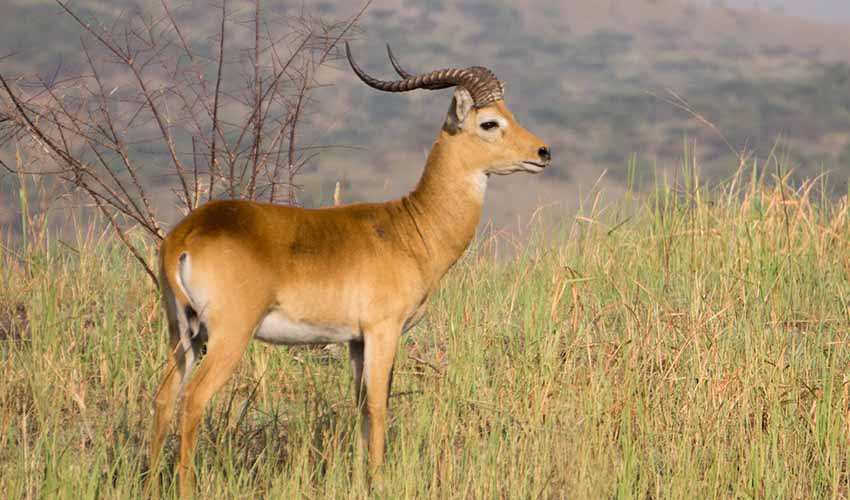
A graceful antelope species native to the savannas and floodplains of sub-Saharan Africa, especially in regions like South Sudan, Uganda, and West Africa. It’s a medium-sized antelope, easily recognized for its sleek, golden-brown coat and elegant build. Males are particularly eye-catching, with striking, lyre-shaped horns that can grow up to 60 centimeters (24 inches) long, curving backward and outward in perfect symmetry. These horns, along with the males’ slightly darker, glossier coats, make them look almost regal in sunlight. Females, on the other hand, are hornless and lighter in color—adaptations that help them blend into tall grasses and avoid predators. Their large, alert eyes and pointed ears allow them to spot danger from afar, making them well-suited to life in open landscapes.
One of the most fascinating aspects of the Kob is its lek mating system, a behavior shared by only a few mammals worldwide. During the breeding season, males gather in small territories called “leks,” which are like open display arenas. Each male fiercely defends his tiny patch of land—sometimes only a few meters wide—and performs elaborate displays to attract females. The females visit these leks to choose mates, often preferring the most dominant or energetic males. Imagine a wildlife version of a dance-off or talent show—only the best performers win the attention of the females! This social behavior creates a spectacular scene, as dozens of golden Kobs gather together, leaping, prancing, and showing off their strength.
Kobs also have a remarkable sense of timing when it comes to survival. Their breeding and calving seasons often coincide with the rains, ensuring that lush green grass is available when mothers need to nurse their calves. A newborn Kob can stand within just 20 minutes of birth—a vital skill in a world full of lions, hyenas, and crocodiles. Despite their beauty and grace, Kobs must always stay alert, often forming large herds for protection.
Distribution
 Benin
Benin Burkina Faso
 Burundi
 Official estimate
 Cameroon
 Central Af. Rep.
 Chad
Chad Côte D’ivoire
 DR Congo (Kinshasa)
 Ethiopia
 Gambia
Official estimate
Gambia
Official estimate
 Ghana
Ghana Guinea-Bissau
 Guinea
 Kenya
Official estimate
Kenya
Official estimate
 Mali
Mali Mauritania
 Niger
Niger Nigeria
 Senegal
 Sierra Leone
Official estimate
Sierra Leone
Official estimate
 South Sudan
 Tanzania
Official estimate
Tanzania
Official estimate
 Togo
Togo Uganda
Anything we've missed?
Help us improve this page by suggesting edits. Glory never dies!
Suggest an editGet to know me
Terrestrial / Aquatic
Altricial / Precocial
Polygamous / Monogamous
Dimorphic (size) / Monomorphic
Active: Diurnal / Nocturnal
Social behavior: Solitary / Pack / Herd
Diet: Carnivore / Herbivore / Omnivore / Piscivorous / Insectivore
Migratory: Yes / No
Domesticated: Yes / No
Dangerous: Yes / No




