


One of the smallest seabirds of the North Atlantic, it looks a bit like a tiny, black-and-white football with wings. Only about half the size of an Atlantic puffin, it has a compact, chunky body, short neck, and a neat, stubby bill. In breeding season, its head, back, and wings are a glossy dark blackish colour, while the underparts are bright white, making it look clean and sharply patterned against grey Arctic seas. A small, rounded tail and fast, buzzing wingbeats add to its toy-like appearance as it zips low over the waves between feeding areas and its colonies. In winter, the face becomes whiter, and the contrast softens, but it still keeps that classic “mini auk” look.
Despite its small size, the little auk is a true Arctic specialist and one of the most numerous seabirds in the North Atlantic. Huge colonies nest on islands in Greenland, Svalbard, Franz Josef Land, and other high-Arctic coasts, often on steep, rocky slopes above the sea. Here, they tuck their nests deep under boulders or in rock crevices rather than building on open ledges. Little auks are strongly faithful to both their mate and nest site, often using the same hidden crack year after year—like returning to the same tiny mountain apartment every summer.
Out at sea, the little auk is a specialist hunter of tiny plankton animals, especially copepods—minute shrimp-like creatures drifting in the water. A single 150-gram bird may need around 60,000 copepods a day to stay fuelled. To catch them, it dives beneath the surface and “flies” underwater with its wings, using quick strokes and steering with its feet. Studies show that little auks can dive to at least 30 metres (about 100 feet) and sometimes more, then rocket back up, using their buoyancy, in a zig-zag path as they snap up prey. Recent research even suggests they may use a kind of suction-feeding—opening the bill and drawing in small prey rather than just grabbing it—an unusual trick for a bird.
Distribution
 Austria
 Bahamas
 Belgium
 Bermuda
 Canada
 Cuba
Cuba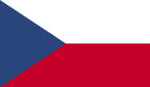 Czechia
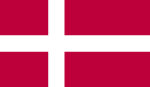 Denmark
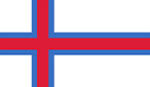 Faroe Islands
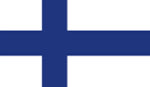 Finland
 France
 Germany
 Gibraltar
 Greenland
 Iceland
 Ireland
 Italy
Italy Latvia
 Malta
Malta Netherlands
 Norway
 Poland
 Portugal
 Russia
 Saint Pierre
 Spain
Svalbard
Spain
Svalbard Sweden
 Turks & Caicos
 Ukraine
 United Kingdom
 United States
Anything we've missed?
Help us improve this page by suggesting edits. Glory never dies!
Suggest an editGet to know me
Terrestrial / Aquatic
Altricial / Precocial
Polygamous / Monogamous
Dimorphic (size) / Monomorphic
Active: Diurnal / Nocturnal
Social behavior: Solitary / Pack / Colony
Diet: Carnivore / Herbivore / Omnivore / Piscivorous / Insectivore
Migratory: Yes / No
Domesticated: Yes / No
Dangerous: Yes / No




