


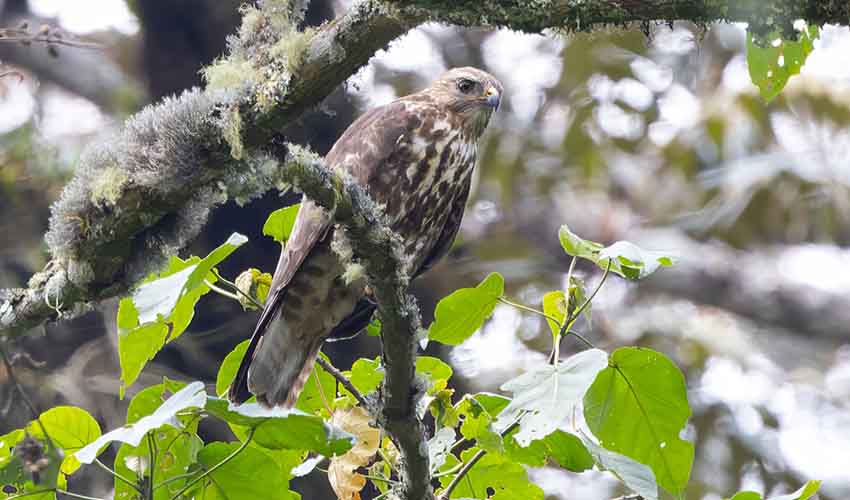
A strong and adaptable bird of prey that lives in highland regions, rocky hills, and mountainous landscapes across parts of Africa and Eurasia. It is well-suited to life in elevated terrain, where steep slopes, open valleys, and unpredictable weather shape daily survival. Medium to large in size, the mountain buzzard has broad wings, a sturdy body, and a relatively short tail, giving it a powerful and balanced appearance in flight. Its plumage is usually brown, with lighter underparts, often streaked or mottled to help it blend into rugged surroundings.
One of the most notable characteristics of the mountain buzzard is its flight style. It is frequently seen soaring high above ridges and peaks, using rising air currents to remain aloft with minimal effort. This ability allows it to cover large areas while searching for food. From above, it scans the ground with sharp eyesight, capable of detecting even small movements. When prey is spotted, the buzzard descends in a smooth, controlled glide rather than a fast chase, conserving energy in environments where food may be spread out.
What distinguishes the mountain buzzard from other buzzards is its preference for higher elevations and open, rocky terrain. While many buzzards favor lowland forests or farmland, the mountain buzzard thrives in harsher landscapes where trees may be sparse. It often perches on cliff edges, large rocks, or isolated trees, using these high points as lookout posts. Its diet is varied, including small mammals, birds, reptiles, and insects, allowing it to adapt to seasonal changes in food availability. This flexibility is key to surviving in mountain regions where conditions can change rapidly.
Distribution
 Burundi
 DR Congo (Kinshasa)
 Ethiopia
 Kenya
Kenya Malawi
 Rwanda
 South Sudan
 Tanzania
 Uganda
Anything we've missed?
Help us improve this page by suggesting edits. Glory never dies!
Suggest an editGet to know me
Terrestrial / Aquatic
Altricial / Precocial
Polygamous / Monogamous
Dimorphic (size) / Monomorphic
Active: Diurnal / Nocturnal
Social behavior: Solitary / Pack / Herd
Diet: Carnivore / Herbivore / Omnivore / Piscivorous / Insectivore
Migratory: Yes / No
Domesticated: Yes / No
Dangerous: Yes / No




