Cavia – Guinea pigs
Unlike most rodents, baby cavies are born with fur, teeth, open eyes, and the ability to walk almost immediately!
The genus Cavia includes some of South America’s most familiar and beloved rodents—guinea pigs and their wild kin. While many people know guinea pigs as friendly pets, their wild relatives are quite different: slimmer, faster, and highly adapted to the open grasslands and scrubby habitats of the continent. Species in this genus are found throughout regions of Peru, Bolivia, Brazil, Argentina, Uruguay, and Paraguay, each living in varied landscapes ranging from river edges to forest margins. Despite their differences, all members of Cavia share a compact body, rounded shape, short limbs, and the unmistakable, high-pitched vocalizations that make them so recognizable.
What makes the genus Cavia especially interesting is the contrast between the domestic guinea pig and its wild counterparts. The domestic form—originally derived from the montane guinea pig—has been bred for thousands of years by Indigenous cultures for food, rituals, and companionship. This long relationship with humans has made domestic guinea pigs calmer, gentler, and more varied in color than their wild cousins. Wild Cavia species, on the other hand, are typically solid brown or gray, perfectly camouflaged for their environments. They rely heavily on speed and stealth, darting through tall grass and ducking into burrows when danger approaches.
Members of the genus Cavia are herbivores that feed on grasses, leaves, seeds, and various plant shoots. Their digestive system is specialized to break down fibrous vegetation, and they practice coprophagy—re-eating nutrient-rich droppings to extract as much nutrition as possible from tough plant matter. This behavior is essential in their natural habitats, where food quality can fluctuate seasonally. They are most active during dawn and dusk, a strategy that helps them avoid predators like foxes, owls, and wild cats while still accessing fresh food.

Species in this genus
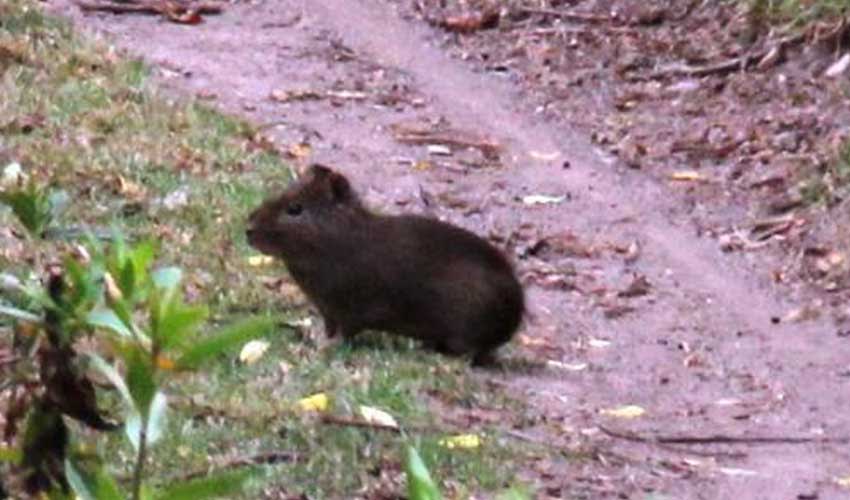


Montane guinea pig
It’s the wild ancestor of every domestic guinea pig

