Eulemur – True lemur
The only primates found outside of Africa and Asia, as they are native exclusively to the island of Madagascar
This genus comprises a diverse group of medium-sized lemurs known as true lemurs or brown lemurs, native to Madagascar and the nearby Comoros Islands. It includes several species, each exhibiting unique characteristics and adaptations yet sharing common traits that make them fascinating members of the primate family. Eulemur species are notable for their social structures, varied diets, and adaptability to different habitats, from tropical rainforests to dry deciduous forests.
One of the most striking features of the Eulemur genus is their diverse coloration and sexual dimorphism, where males and females often have different coat colors and patterns. For example, the red-bellied lemur (Eulemur rubriventer) exhibits reddish-brown fur, while males and females of the black lemur (Eulemur macaco) show significant differences in coloration, with males being jet black and females a rich brown with a lighter underside. This variation not only aids in species identification but also plays a role in their social interactions and mating behaviors.
Despite their adaptability, Eulemur species face significant threats in the wild. Habitat destruction due to deforestation, agricultural expansion, and logging is the primary threat to their survival. Additionally, hunting for bushmeat and capture for the pet trade pose serious risks. Many Eulemur species are listed as Vulnerable or Endangered on the IUCN Red List of Threatened Species, highlighting the urgent need for conservation efforts.

Species in this genus


Blue-eyed black lemur
The only primate besides humans known to consistently have blue eyes
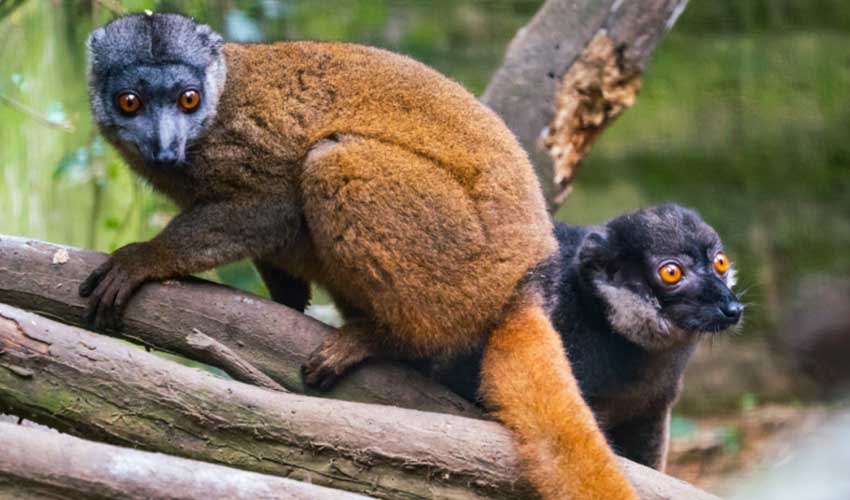
Gray-headed lemur
Its population shrinked due to slash-and-burn agriculture, logging, and hunting
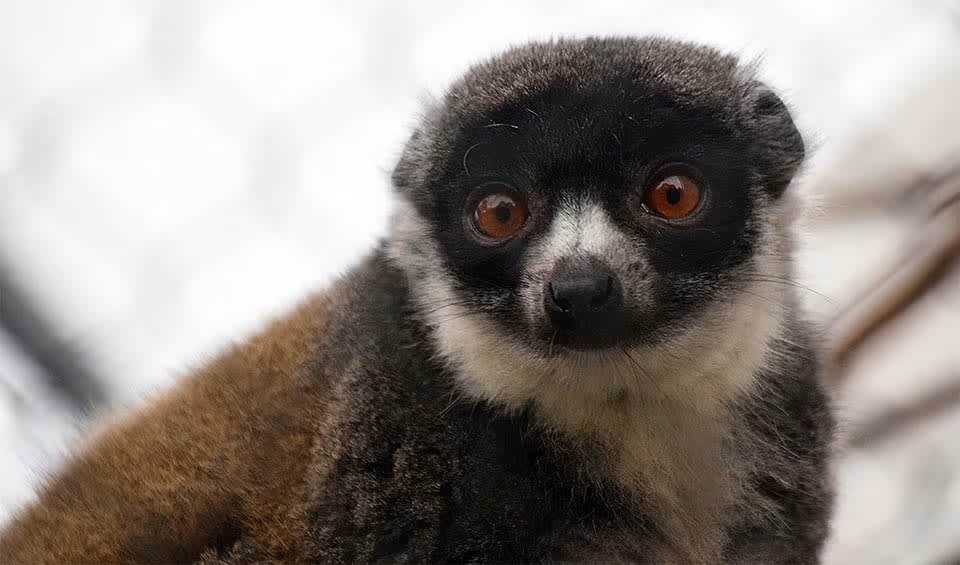
Mongoose lemur
A live emoji — can frown, yawn, and grimace!

Black lemur
Color coding? No problem!

Collared brown lemur
Their eyes are a vivid orange-red, so even in dim forest light their stare looks bright and intense

Crowned lemur
Males and females are easy to tell apart, a rare among lemurs

Sanford’s brown lemur
Sometimes bite millipedes and rub the oozy chemicals into their fur—believed to act like natural insect repellent
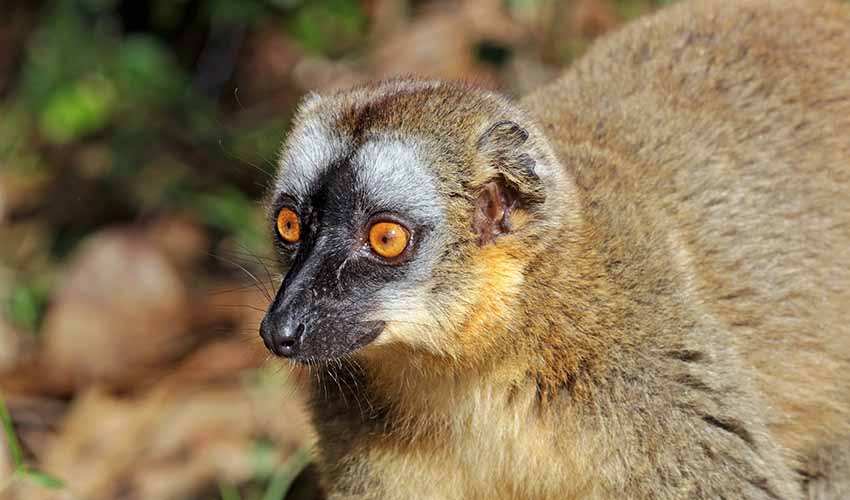
Common brown lemur
They love fruit so much that a big part of their day is basically “find fruit, eat fruit, move to next fruit”

Red-bellied lemur
Often move along narrow branches like they’re walking a tightrope, tail held out as a balancing pole

Red-fronted lemur
Their name comes from the reddish fur on the forehead and cheeks—like they’re wearing natural blush or a rusty headband
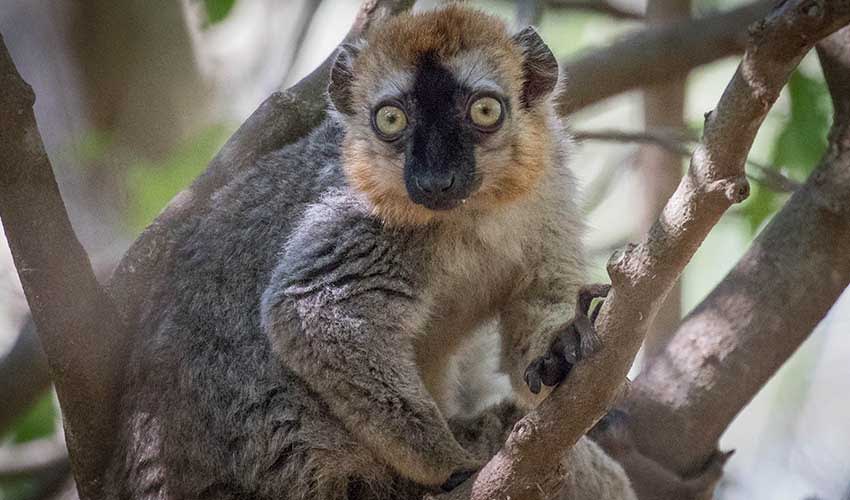
Red lemur
It practices cathemerality, one of the rarest activity patterns in primates

White-headed lemur
They’re big fruit fans and drop or poop out seeds all over the forest, acting as fuzzy, tree-planting machines

