Eunymphicus
“Horns” on their heads are actually narrow feathers, and they become more noticeable when the birds are alert or excited
These birds immediately stand out because of the narrow, horn-like feathers that rise from the top of their heads, giving them a curious and almost mythical appearance. Their bodies are mostly bright green, which helps them blend into forest canopies, while their faces show touches of black, yellow, and sometimes red. Medium-sized and agile, these parakeets are strong fliers with long tails that help them maneuver easily through trees. Because they live in such a limited area, they are closely tied to the health of their island forests.
One of the most interesting things about Eunymphicus parakeets is how social and vocal they are. They are often seen in small groups or pairs, constantly communicating with sharp calls as they move through the forest. These sounds help them stay connected in dense vegetation where visibility is limited. They spend much of their day foraging for food, which includes fruits, seeds, buds, and flowers. Their curved beaks are well-suited for handling tough plant material, and they often use their feet to hold food while eating, showing impressive coordination. Unlike parrots that thrive near human settlements, Eunymphicus species prefer quiet, natural forests and are less likely to adapt to disturbed environments.
What truly distinguishes the genus Eunymphicus from other parakeets is its strong sense of identity shaped by isolation. Living on islands has allowed these birds to develop features not seen elsewhere, especially the distinctive head feathers that give them their common name. Even within the genus, differences in size, color patterns, and habitat use can be seen between species and subspecies. Some favor higher mountain forests, while others are more common in lower elevations. They are also known for strong pair bonds, with mates staying close, grooming each other, and working together to raise their young in tree cavities. These close relationships play an important role in their survival.

Species in this genus
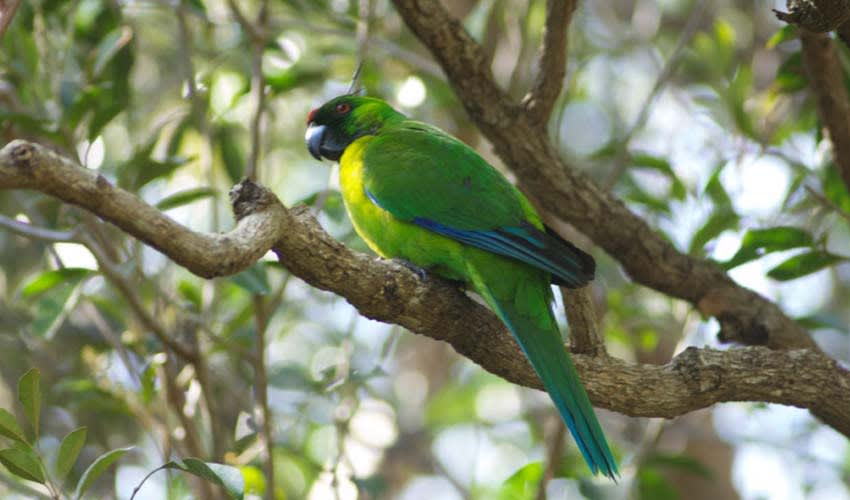


Ouvea parakeet
When resting, it can sit so still and blend in so well that it looks just like a cluster of leaves

