Leucopsar – Bali myna
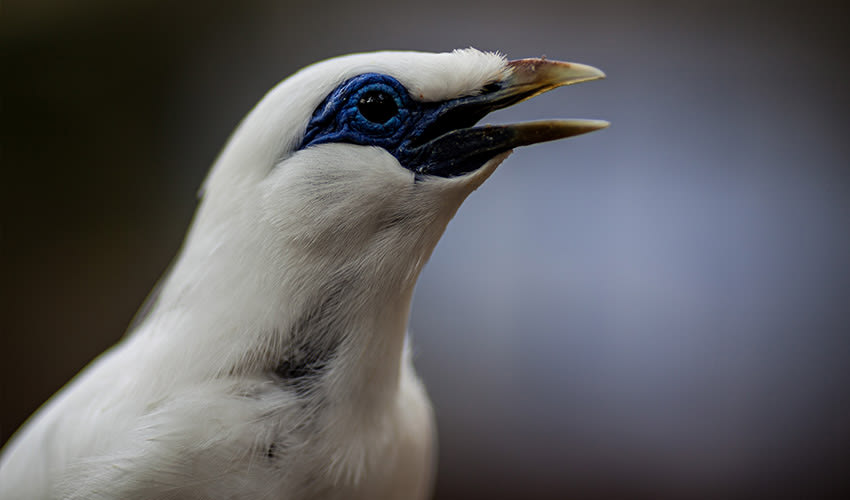
Their expressive crest rises when they're excited, curious, or alert — think of it as emotional “body language”
One of the world’s most striking and endangered birds — and a symbol of Indonesia’s conservation efforts. Endemic to the island of Bali, this elegant songbird stands out with its snow-white plumage, sky-blue skin around the eyes, and sleek black wingtips and tail edges. A feathery crest crowns its head, giving it a regal, almost windswept look. At first glance, it resembles a tiny white phoenix — brilliant, rare, and undeniably charismatic.
In the wild, Bali mynas inhabit dry monsoon forests and savanna woodlands in northwest Bali, particularly around West Bali National Park. They thrive in open areas with scattered trees and shrubs, perching high to survey their surroundings. Agile and alert, they feed on fruit, nectar, seeds, and insects, hopping through branches or swooping to the ground for a quick snack. Their calls range from soft whistles to loud, metallic notes — a surprisingly varied repertoire for such a delicate-looking bird.
The Bali myna’s courtship is gentle but expressive: pairs preen each other, fluff their crests, and call softly, strengthening bonds before nesting season. They typically nest in tree cavities, laying a small clutch of eggs and fiercely guarding their nesting site. Like many starlings, they are social and intelligent, often seen in small flocks during feeding or roosting. Their behavior is lively yet cautious — understandable, given their dramatic history.
Unfortunately, the Bali myna is one of the rarest birds on Earth, once reduced to fewer than 10 individuals in the wild. The culprit? Illegal wildlife trade driven by demand for the pet bird market, combined with habitat loss and limited wild range. Their beautiful appearance and rarity made them tragically desirable. Intensive conservation efforts — including breeding programs, reintroductions, ranger patrols, and community-based protection — have slowly improved their numbers, but the species remains Critically Endangered. Today, several released populations survive in protected areas, yet continued vigilance is essential.
Species in this genus


Bali myna
Their expressive crest rises when they’re excited, curious, or alert — think of it as emotional “body language”

