Microsciurus – Dwarf squirrels
Impressive because of their speed, stealth, and ability to disappear
Some of the smallest and most secretive tree squirrels in the forests of Central America and South America. Their name fits them well because “micro” means small, and these squirrels are much tinier than the big, bushy-tailed squirrels many people imagine. They usually have slim bodies, short, rounded ears, sharp claws, and tails that are less fluffy than those of many familiar tree squirrels. Their fur is often brown, gray, olive, or reddish-brown, which helps them blend into bark, vines, moss, and shadowy forest branches. This quiet coloring makes them very different from larger, brighter, or more obvious squirrels.
One thing that makes dwarf squirrels special is their hidden forest lifestyle. They move quickly along tree trunks, branches, and tangled vines, often staying in thick vegetation where they are hard to see. Unlike city squirrels that may boldly approach people or forage in open parks, dwarf squirrels are usually shy and difficult to observe. Their tiny size helps them slip through narrow spaces and move along smaller branches that may not support heavier animals. This gives them access to food and hiding places that larger squirrels might miss. They are like quick little shadows of the rainforest canopy.
Dwarf squirrels eat a variety of forest foods, including fruits, seeds, nuts, fungi, and sometimes small insects. As they feed, they may help spread seeds through the forest, playing a small but useful role in keeping plant life growing. Their sharp claws allow them to cling tightly to bark, and their quick reflexes help them escape predators such as snakes, birds of prey, and small wild cats. Because they are so fast and quiet, spotting one can feel like seeing a tiny forest secret. They may appear for only a few seconds before vanishing behind leaves or around a tree trunk.

Species in this genus


Amazon dwarf squirrel
Its tiny size is not a weakness; it is one of its best survival tools

Central American dwarf squirrel
Can be so quiet and fast that even experienced wildlife watchers may miss them
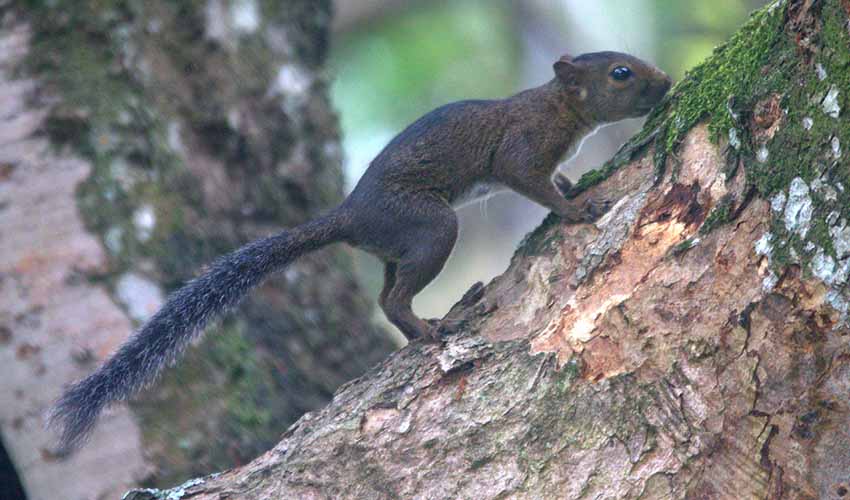
Santander dwarf squirrel
Seeing one in the wild would be very special because it is not a common or well-known animal

