Starnoenas – Blue-headed quail-dove
Isn’t closely related to quail—it simply acts a bit like one, staying low and running through cover
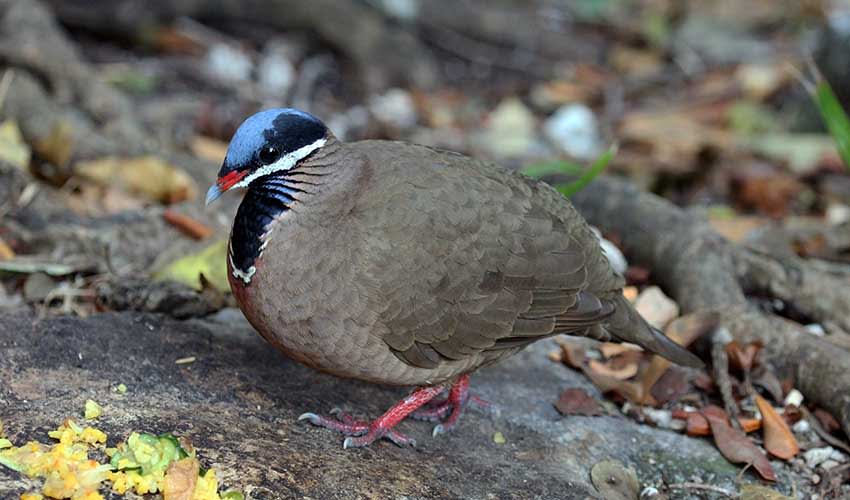
One of Cuba’s most unforgettable birds—a shy forest-dweller that looks like it’s wearing a jewel on its head. Its body is warm cinnamon-brown, but the crown is a rich, bright blue that seems almost painted on. A bold black stripe runs through the eye, edged by clean white lines that give the face a sharp, masked look, and there’s a dark patch on the throat that adds to its “formal” appearance. Up close, it can feel surprisingly elegant for a bird that spends so much time on the ground. It’s medium-sized for a dove, with a sturdy build and strong legs made for walking rather than perching. Unlike the street pigeons most people picture, this bird’s style and habits are all about the hidden world of leaf litter, shadows, and quiet forest trails.
What truly sets the Blue-headed quail-dove apart is how ground-based it is. It prefers to walk calmly through undergrowth, pausing often to pick at fallen seeds, berries, and small food items it finds on the forest floor. When it feels safe, it moves with a measured, almost cautious confidence—step, pause, look, step again—blending into the brown leaves until the blue crown suddenly flashes as it turns its head. It usually doesn’t hang around open places for long, and it can vanish into cover with just a few quick steps. If startled, it can explode into flight with a loud burst of wingbeats, then drop back down into dense vegetation a short distance away, as if it never existed.
The Blue-headed quail-dove is found only in Cuba, where it favors lowland forests, including wetter, swampy areas, and sometimes higher forests too. It’s often linked with places that still feel wild—thick understory, plenty of shade, and lots of fallen fruit and seeds to forage. Unfortunately, it has become uncommon in many parts of its range, largely due to hunting, habitat changes, and threats from predators introduced by people.
Species in this genus


Blue-headed quail-dove
Isn’t closely related to quail—it simply acts a bit like one, staying low and running through cover

