Thylamys
Tiny, nocturnal creatures that combine the agility of mice with the survival skills of desert specialists
Belonging to the family Didelphidae, these opossums are part of the ancient lineage of New World marsupials, relatives of the better-known opossums found in the Americas. What makes Thylamys unique is its remarkable fat-storing tail, an adaptation that allows it to endure harsh, unpredictable environments by storing energy much like a camel stores fat in its hump. Found across South America’s dry forests, savannas, and scrublands, from Bolivia and Argentina to Chile and Brazil, Thylamys species are survivors of extremes—small but incredibly resourceful.
Physically, Thylamys species are tiny and delicate, measuring only 10–15 centimeters (4–6 inches) in body length, with tails roughly equal in length to their bodies. They typically weigh 20–40 grams (less than 1.5 ounces)—about the size of a house mouse. Their fur is soft and dense, usually grayish or brown on top and pale underneath, providing camouflage against rocky or sandy terrain. The most distinctive feature is the fat-storing tail, which thickens noticeably when food is abundant. This fatty deposit serves as an energy reserve during periods of scarcity or cold, helping the animal survive seasonal fluctuations in temperature and food availability. When the stored fat is used up, the tail becomes slender again, making it a visible indicator of the opossum’s condition. They also have large black eyes, keen whiskers, and prehensile tails that help them climb, balance, and even carry nesting material—traits that make them surprisingly adept for life in trees and shrubs as well as on the ground.
Behaviorally, Thylamys opossums are nocturnal and solitary, spending their nights foraging for insects, fruits, seeds, and small vertebrates. They are omnivorous opportunists, eating whatever they can find, which allows them to thrive in both arid and semi-arid environments. During the day, they shelter in tree hollows, rock crevices, or nests made of leaves and grass, often hidden under logs or in burrows. They are agile climbers and quick runners, using their prehensile tails for balance and their sharp claws for gripping surfaces.

Species in this genus


Dwarf fat-tailed mouse opossum
That chunky tail is basically an emergency snack bank—extra energy gets stored there for lean times

Dry Chaco fat-tailed opossum
Built for a thorny, hot, seasonal landscape where being adaptable matters more than being picky
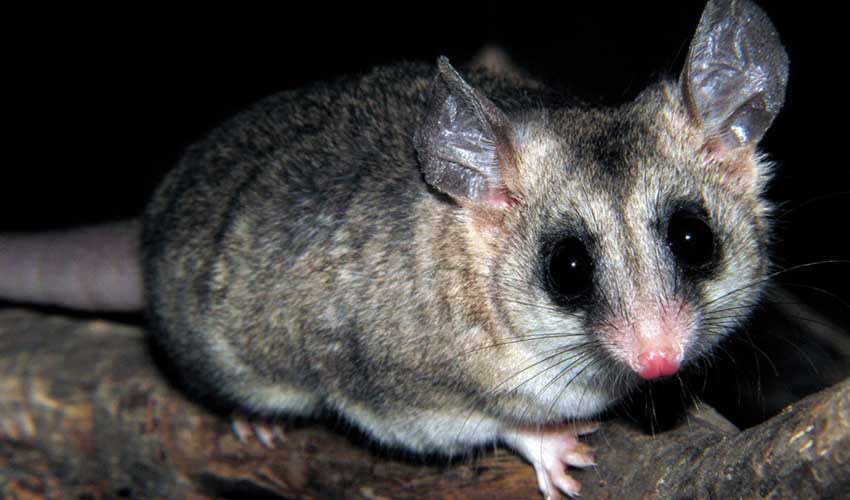
Elegant fat-tailed mouse opossum
Has a surprisingly high tolerance for cold, which is rare among small mammals of its size

White-bellied fat-tailed mouse opossum
Big eyes aren’t just cute—they’re built for low light, helping it navigate and hunt at night

