Xipholena
In good light, some species show bold purple or rich chestnut tones that seem almost painted on
Members of this group are often called pompadour pigeons, and they live in the warm, leafy forests of South America. At first glance, they don’t look like the city pigeons most people are familiar with. Instead of dull gray feathers, Xipholena birds wear smooth coats of deep purple, rich chestnut, creamy white, or smoky gray, depending on the species. Their feathers look polished, almost silky, giving them a refined appearance that sets them apart from other forest birds. They are medium-sized, calm in their movements, and usually seen perched quietly in trees rather than walking on the ground.
What makes Xipholena different from many other pigeons is its lifestyle and personality. While urban pigeons are often bold and noisy, Xipholena birds are shy and reserved. They prefer the forest canopy, where they move slowly and carefully between branches. Their bodies are compact, and their heads appear smooth and rounded, adding to their gentle, almost regal look. Instead of loud calls, they communicate with soft coos and low murmurs that blend into the forest’s background.
These birds are dedicated fruit eaters and spend much of their day searching for ripe berries and forest fruits. They swallow fruit whole and later pass the seeds, helping spread plants across the forest. In this way, Xipholena plays an important role in keeping tropical forests healthy and growing. Unlike birds that eat insects or hunt prey, Xipholena relies on patience and memory—remembering where fruiting trees are and returning to them at just the right time. T
There are also some fun and cool facts that make Xipholena especially interesting. One species, the purple-breasted cotinga, looks almost unreal, with a vivid purple chest that seems to glow in the right light. Another species has soft brown tones that blend perfectly with tree bark, making it surprisingly hard to spot.

Species in this genus
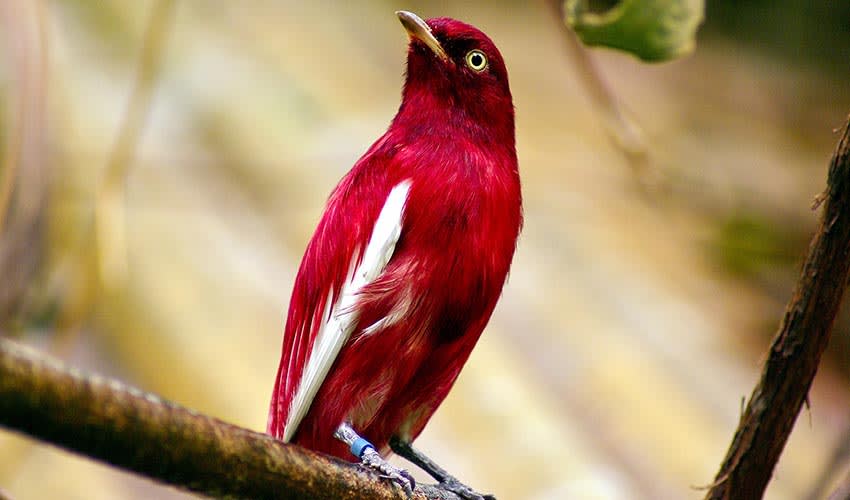


Pompadour cotinga
In shade it may look almost black, but when light hits it, the color can suddenly look rich and velvety

