


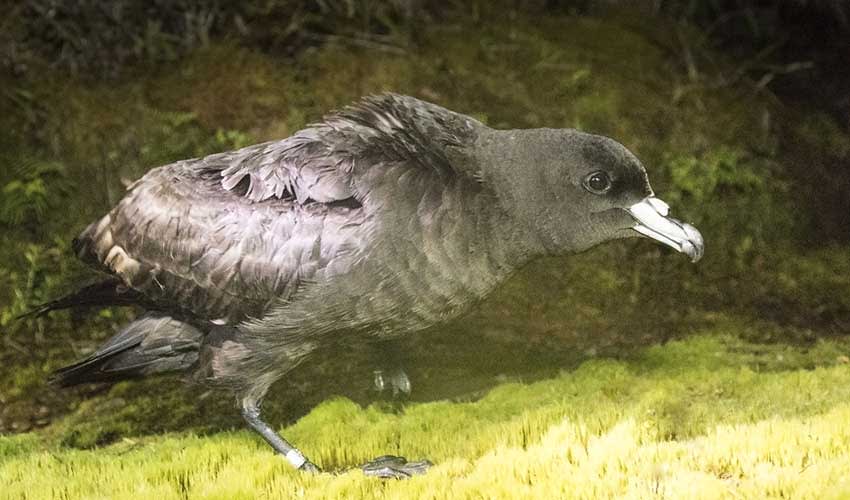
From a distance, it can look like a moving shadow skimming the ocean, with long wings that slice the air and a sturdy body built for endurance. Up close, it’s a rich, sooty-brown to black bird with a strong, hooked bill and a confident, purposeful look. Like many petrels, it spends most of its life at sea—often far from land—gliding low over swells, banking smoothly, and using the wind like a conveyor belt. It’s not a bird of calm lakes or gentle shorelines; it belongs to the restless open ocean, where it can travel vast distances in search of food.
While many seabirds breed across many islands, black petrels are strongly associated with New Zealand, returning to specific islands and coastal breeding areas where they can nest safely. They don’t build open nests that you’d spot from a trail. Instead, they often nest in burrows or sheltered ground sites, which helps protect eggs and chicks from weather and daytime trouble. They’re also famously more active at night around their nesting sites, arriving and calling in darkness like secretive commuters.
At sea, black petrels are skilled opportunists. They feed on squid, fish, and other marine life near the surface, and they’ll also scavenge when the chance appears. Their flight style is a mix of strong wingbeats and smooth gliding, allowing them to patrol large areas without burning through energy. One of their hidden superpowers is their ability to use smell to locate food over open water—an advantage in a world without landmarks. They can follow scent trails across the sea, homing in on productive feeding areas that might otherwise seem like empty blue space. And because they spend so much time roaming, they can cross huge stretches of ocean as part of normal life, turning distance into something routine.
Distribution
 Australia
 Colombia
 Cook Islands
 Costa Rica
 Ecuador
 El Salvador
 Fiji
Fiji French Polynesia
 French Southern T.
 Guatemala
 Kiribati
 Mexico
 New Caledonia
 New Zealand
 Nicaragua
 Niue
Niue Panama
 Peru
Peru Tonga
TongaAnything we've missed?
Help us improve this page by suggesting edits. Glory never dies!
Suggest an editGet to know me
Terrestrial / Aquatic
Altricial / Precocial
Polygamous / Monogamous
Dimorphic (size) / Monomorphic
Active: Diurnal / Nocturnal
Social behavior: Solitary / Pack / Colony
Diet: Carnivore / Herbivore / Omnivore / Piscivorous / Insectivore
Migratory: Yes / No
Domesticated: Yes / No
Dangerous: Yes / No




