


As the largest parasitic cuckoo in the world, it has earned both admiration and notoriety across Australia, New Guinea, and parts of Indonesia. With its impressive size, flamboyant features, and unusual breeding behavior, the Channel-billed Cuckoo is a living symbol of nature’s ingenuity—and mischief.
Its most distinctive feature is its massive, curved, grey bill, which resembles that of a hornbill more than a typical cuckoo—hence the name “channel-billed.” Its plumage is mostly pale gray, with lighter underparts and a banded tail, giving it a sleek yet ghostly appearance. The red ring around its eyes and its long, graceful tail feathers make it instantly recognizable in flight. Despite its large size, it is a surprisingly adept flier, capable of gliding long distances with slow, deep wingbeats. When silhouetted against the sky, it cuts an unforgettable figure—a long-tailed phantom soaring over the treetops.
Like many cuckoos, it is a brood parasite—it lays its eggs in the nests of other birds, leaving them to raise its chicks. But unlike the stealthy, secretive cuckoos of Europe, this species’ approach is almost theatrical. During the breeding season, from August to January, pairs of Channel-billed Cuckoos fly noisily through the skies of northern and eastern Australia, calling raucously and chasing each other in wild aerial displays.
The behavior of these birds is both dramatic and surprisingly intelligent. They often travel in family groups after the breeding season, and their powerful flight allows them to cross wide bodies of water with ease. Their calls are among the loudest of any bird in Australia—grating and almost metallic, often described as a mix between a laugh and a squawk. To some, it’s an endearing hallmark of summer; to others, a noisy nuisance at dawn. But regardless of opinion, their presence is unforgettable.
Distribution
 Australia
 East Timor
 Indonesia
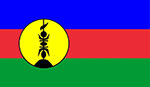 New Caledonia
 New Zealand
 Papua New Guinea
Anything we've missed?
Help us improve this page by suggesting edits. Glory never dies!
Suggest an editGet to know me
Terrestrial / Aquatic
Altricial / Precocial
Polygamous / Monogamous
Dimorphic (size) / Monomorphic
Active: Diurnal / Nocturnal
Social behavior: Solitary / Pack / Herd
Diet: Carnivore / Frugivore / Omnivore / Piscivorous / Insectivore
Migratory: Yes / No
Domesticated: Yes / No
Dangerous: Yes / No




