


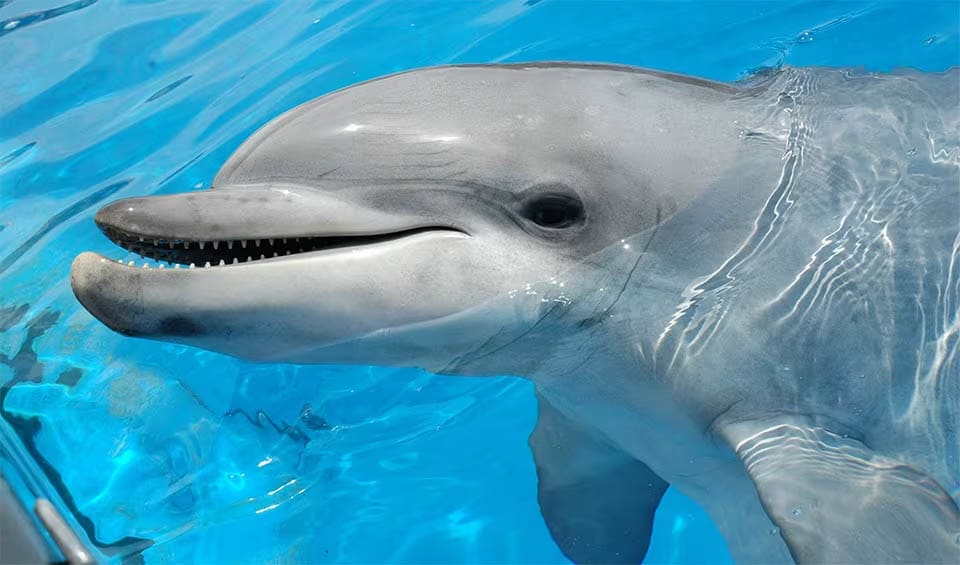
This charismatic resident of warm and temperate oceans is a true head-turner. Its sleek body boasts a dazzling two-tone coat – a deep, smoky gray on top that fades to a lighter, almost silvery shade on its belly. This nifty trick, called countershading, helps it blend in perfectly with the dappled sunlight filtering through the water, making it a master of surprise for both prey and predator. But unlike most fish, the bottlenose dolphin is a brainy mammal, packing a powerful intellect in its head – proportionally larger than most creatures on Earth! And that permanent smile formed by its curved mouth? It makes them seem eternally happy, adding to their undeniable charm.
Bottlenose dolphins are all about strong social bonds. They form close-knit families called pods, with anywhere from a few individuals to a bustling hundred or more! Within these pods, there’s a real sense of community. They communicate using a fascinating language of clicks, whistles, and squeaks, as complex as any human conversation. Imagine whispering secrets to your friends underwater with just clicks and whistles – that’s the impressive way these social butterflies chat!
Life for a common bottlenose dolphin is a delightful mix of hunting and fun. They’re masters of the water, using their powerful tails to propel themselves through the waves at impressive speeds. Working together, they herd fish into tight groups, then take turns darting in for a delicious snack. But being a dolphin isn’t all about work! They love riding the waves created by boats and even find joy in chasing playful bubbles. Calves, especially, are bundles of boundless energy, constantly circling their mothers and playfully nipping at each other’s fins.
Distribution
 Atlantic Ocean
 Indian ocean
 Pacific ocean
 Black sea
 Mediterranean Sea
Red Sea
Mediterranean Sea
Red Sea Albania
 Algeria
 American Samoa
 Angola
 Anguilla
 Antigua & Barbuda
 Argentina
 Aruba
Aruba Australia
 Bahamas
 Bahrain
 Bangladesh
 Barbados
 Belgium
 Belize
 Benin
Benin Bermuda
 Bonaire Sint Eustatius And Saba
 Bosnia And Herz.
 Brazil
 British Indian T.
 British Virgin Is.
 Brunei
 Bulgaria
 Cambodia
 Cameroon
 Canada
 Cape Verde
 Cayman Islands
 Chile
Chile China
China Christmas Island
 Cocos Is. (Keeling)
 Colombia
 Comoros
 Congo-Brazzaville
 Cook Islands
 Costa Rica
 Croatia
 Cuba
Cuba Curaçao
 Cyprus
 Côte D’ivoire
 DR Congo (Kinshasa)
 Denmark
 Djibouti
 Dominica
 Dominican Republic
 East Timor
 Ecuador
 Egypt
Egypt El Salvador
 Equatorial Guinea
 Eritrea
 Falkland Islands
 Faroe Islands
 Fiji
Fiji France
 French Guiana
 French Polynesia
 Gabon
Gabon Gambia
 Georgia
 Germany
 Ghana
Ghana Gibraltar
 Greece
 Grenada
Guadeloupe
Grenada
Guadeloupe Guam
Guam Guatemala
 Guernsey
 Guinea-Bissau
 Guinea
 Guyana
 Haiti
Haiti Honduras
 Hong Kong
 India
India Indonesia
 Iran
Iran Iraq
Iraq Ireland
 Isle Of Man
 Israel
 Italy
Italy Jamaica
 Japan
Japan Jersey
 Jordan
 Kenya
Kenya Kiribati
 Korea
Korea Kuwait
 Lebanon
 Liberia
 Libya
Libya Macao
Macao Madagascar
 Malaysia
 Maldives
 Malta
Malta Marshall Islands
Martinique
Marshall Islands
Martinique Mauritania
 Mauritius
Mayotte
Mauritius
Mayotte Mexico
 Micronesia
 Monaco
 Montenegro
 Montserrat
 Morocco
 Mozambique
 Myanmar
 Namibia
 Nauru
Nauru Netherlands
 New Caledonia
 New Zealand
 Nicaragua
 Nigeria
 Niue
Niue Norfolk Island
 Nort. Mariana Is.
 North Korea
 Norway
 Oman
Oman Pakistan
 Palau
Palau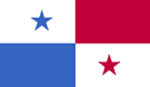 Panama
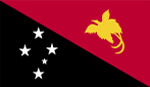 Papua New Guinea
 Peru
Peru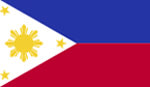 Philippines
 Pitcairn
 Portugal
 Puerto Rico
 Qatar
Qatar Romania
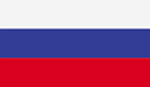 Russia
Réunion
Russia
Réunion Saint Helena
 Saint Lucia
 Saint Martin
 Saint Pierre
 Saint Vincent
 Samoa
Samoa Saudi Arabia
 Senegal
 Seychelles
 Sierra Leone
 Singapore
 Sint Maarten
 Slovenia
 Solomon Islands
 Somalia
 South Africa
 Spain
Spain Sri Lanka
 St. Kitts & Nevis
 Sudan
Sudan Suriname
 Syria
Syria São Tomé & Príncipe
 Taiwan
 Tanzania
 Thailand
 Togo
Togo Tokelau
 Tonga
Tonga Trinidad & Tobago
 Tunisia
 Turks & Caicos
 Tuvalu
 Turkey
 UAE
UAE US Virgin Islands
 Ukraine
 United Kingdom
 United States
 Uruguay
 Vanuatu
 Venezuela
 Vietnam
 Wallis & Futuna
 Yemen
YemenAnything we've missed?
Help us improve this page by suggesting edits. Glory never dies!
Suggest an editGet to know me
Terrestrial / Aquatic
Altricial / Precocial
Polygamous / Monogamous
Dimorphic (size) / Monomorphic
Active: Diurnal / Nocturnal
Social behavior: Solitary / Pack / Pods
Diet: Carnivore / Herbivore / Omnivore / Piscivorous / Insectivore
Migratory: Yes / No
Domesticated: Yes / No
Dangerous: Yes / No





