


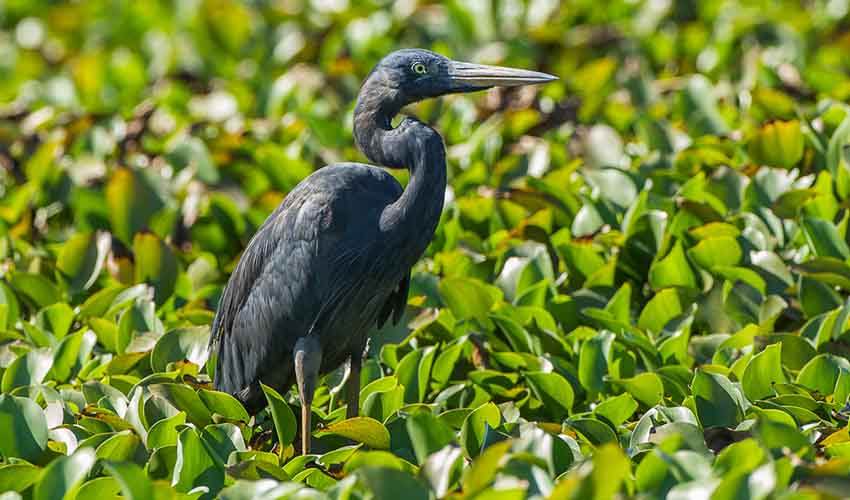
The kind of heron that can feel more like a rumor than a bird, because it prefers quiet places—mangroves, sheltered bays, tidal flats, lagoons, and calm river mouths—where it can stand motionless and blend into shadows. In good light, you can see its beauty: a dark, slate-gray body with a strong, heavy bill and long legs built for wading. It often looks serious and watchful, as if it’s permanently focused on the next ripple in the water. Because it spends so much time in coastal wetlands and mangroves, many people miss it entirely unless they move slowly and scan the edges where water meets roots and mud.
Many herons are pale, bright, or show strong patterns that stand out in open marshes, but this species’ dusky tones help it disappear against mangrove trunks, wet rocks, and shaded shallows. It is also less likely to gather in big, obvious groups than some herons. Instead, it’s often seen alone or in pairs, quietly working a shoreline. Its build is another clue: it is chunky and powerful, with a thick bill that looks designed for handling larger, tougher prey than the delicate “needle bills” of some smaller herons. When it flies, it can look surprisingly broad and heavy, with slow, steady wingbeats that carry it from one hidden feeding spot to another.
Humblot’s heron hunts with patience rather than speed. It may stand like a statue for minutes at a time, then make a sudden, precise strike. Its menu can include fish, crabs, and other small animals found in shallow water, and it often feeds where tides expose muddy flats or where mangroves create little pockets full of life. This bird is especially tied to places that change with the day—tidal rhythms that turn dry ground into feeding pools and then back again.
Distribution
 Comoros
 Madagascar
 Mayotte
Anything we've missed?
Help us improve this page by suggesting edits. Glory never dies!
Suggest an editGet to know me
Terrestrial / Aquatic
Altricial / Precocial
Polygamous / Monogamous
Dimorphic (size) / Monomorphic
Active: Diurnal / Nocturnal
Social behavior: Solitary / Pack / Herd
Diet: Carnivore / Herbivore / Omnivore / Piscivorous / Insectivore
Migratory: Yes / No
Domesticated: Yes / No
Dangerous: Yes / No




