


One of the most widespread and ecologically important bats in the Neotropics, found throughout Central and South America and across many Caribbean islands. As one of the best-known fruit bats in the Western Hemisphere, it plays a vital role as a seed disperser and pollinator, helping to shape and sustain tropical forests. Despite its name, the Jamaican fruit bat is not limited to Jamaica—it thrives in a wide range of habitats, from humid rainforests and dry scrublands to agricultural areas and even urban gardens.
Physically, the Jamaican fruit bat is a medium-sized bat. It has short, velvety fur, usually dark brown or grayish, with lighter underparts. One of its most distinctive features is its leaf-shaped nose, or “nose leaf,” which aids in echolocation—a built-in sonar system that allows the bat to navigate and forage in complete darkness. Its large, forward-facing eyes give it a soft, almost dog-like expression, while its short, broad wings are perfectly adapted for maneuvering through dense forest canopies. The bat’s sharp teeth and strong jaw muscles allow it to pierce the tough skins of tropical fruits, and its tongue is slightly roughened to help scoop out juicy pulp.
The Jamaican fruit bat is frugivorous, feeding primarily on a wide variety of tropical fruits, such as figs, guavas, bananas, papayas, mangos, and wild forest berries. However, it’s not a picky eater—it will also consume flower nectar, leaves, and occasionally insects. When feeding, it often plucks fruits directly from trees and carries them to a nearby feeding roost, a favorite perch where it can eat undisturbed. These roosts often accumulate piles of fruit remains and seeds beneath them, which later germinate—making the bat an excellent seed disperser. In fact, scientists have found that the Jamaican fruit bat disperses the seeds of dozens of native plant species, making it a key player in forest regeneration.
Distribution
 Anguilla
 Antigua & Barbuda
 Aruba
Aruba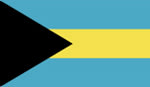 Bahamas
 Barbados
 Belize
 British Virgin Is.
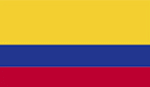 Colombia
 Cuba
Cuba Dominica
 Dominican Republic
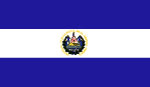 El Salvador
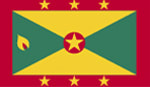 Grenada
 Guadeloupe
 Guatemala
 Haiti
Haiti Honduras
 Jamaica
Martinique
Jamaica
Martinique Mexico
 Montserrat
 Nicaragua
 Panama
 Puerto Rico
 Saint Lucia
 Saint Vincent
 St. Kitts & Nevis
 Trinidad & Tobago
Anything we've missed?
Help us improve this page by suggesting edits. Glory never dies!
Suggest an editGet to know me
Terrestrial / Aquatic
Altricial / Precocial
Polygamous / Monogamous
Dimorphic (size) / Monomorphic
Active: Diurnal / Nocturnal
Social behavior: Solitary / Pack / Colony
Diet: Carnivore / Frugivore / Omnivore / Piscivorous / Insectivore
Migratory: Yes / No
Domesticated: Yes / No
Dangerous: Yes / No




