


Found in parts of South America, especially in humid forests, it is mostly black and looks sleek from a distance. The “purple-throated” part is the surprise—when the light hits just right, the throat area can shimmer with a rich purple or violet shine, like a hidden gem tucked into a dark jacket. This glossy patch is one of its most distinct features and helps make it stand out from other dark birds that might otherwise look similar in the shadows.
What makes the purple-throated fruitcrow different from actual crows is that it isn’t really a crow at all. It belongs to a different bird group, but it earned the “fruitcrow” name because of its crow-like build and confident posture. Unlike many crows that are famous for clever scavenging and living close to people, the purple-throated fruitcrow is a forest specialist. It spends much of its time high in the canopy, perching on branches and moving between trees with steady, purposeful flights. It has a thick beak designed for grabbing and swallowing fruit, and its body shape is strong and compact, built for life in dense forests rather than open city spaces.
Its behavior can be just as memorable as its look. Purple-throated fruitcrows often travel in small groups, and when they gather, they can be surprisingly noisy. Their calls are loud, rough, and sometimes croaky, which adds to that “crow-like” impression. In the forest, their voices can sound like a sudden argument breaking out above your head, even when the birds are simply keeping in contact with one another. They are also curious birds, often watching intruders—like hikers or other animals—with a steady, alert gaze. While they’re not famous for tool use like some true crows, they still show plenty of intelligence in how they move through the canopy and how they find food.
Distribution
 Bolivia
 Brazil
 Colombia
 Costa Rica
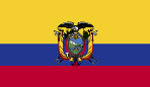 Ecuador
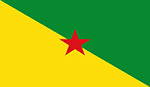 French Guiana
 Guyana
 Nicaragua
 Panama
 Peru
Peru Suriname
 Venezuela
Anything we've missed?
Help us improve this page by suggesting edits. Glory never dies!
Suggest an editGet to know me
Terrestrial / Aquatic
Altricial / Precocial
Polygamous / Monogamous
Dimorphic (size) / Monomorphic
Active: Diurnal / Nocturnal
Social behavior: Solitary / Pack / Herd
Diet: Carnivore / Frugivore / Omnivore / Piscivorous / Insectivore
Migratory: Yes / No
Domesticated: Yes / No
Dangerous: Yes / No




