Acridotheres – Typical mynas
Farmers like them for eating pests, and they sometimes hop right beside cattle or water buffalo, catching insects stirred up by hooves
This genus includes the birds most people think of when they hear the word myna — social, smart, and often loud thrush relatives native to South and Southeast Asia, but now familiar far beyond their original range. These are the typical mynas, a lively group known for their bold personalities, glossy feathers (usually shades of black, brown, or dark gray), and brightly colored skin patches or wattles around the face. Some species, like the common myna, sport striking yellow eye patches and bare skin, while others, like the jungle myna, show sleek plumage accented with subtle crests or contrasting patches. Their appearance alone makes them stand out, but it’s their behavior that really gives them character.
These birds are adaptable omnivores, happily feeding on insects, fruit, seeds, small vertebrates, and scraps around human settlements. This dietary flexibility — plus their intelligence and confident nature — has helped some species thrive in cities, farms, parks, and villages. They move in noisy flocks, hop energetically across the ground, and communicate with an impressive range of calls, from whistles and chattering notes to loud, grating squawks. Their vocal versatility isn’t quite parrot-level, but many species can mimic sounds surprisingly well, especially those living close to humans.
In natural habitats like forest edges, open woodland, and agricultural fields, mynas play a role in controlling insects and dispersing seeds, though they can also raid crops or compete with native birds for nesting sites. Some species nest in tree cavities and buildings, lining their nests with twigs, leaves, and whatever soft materials they find. They are attentive parents, with both sexes often sharing the work of raising chicks. Where they’re native, mynas fit neatly into ecological webs; however, in places where they have been introduced — such as parts of Australia, the Pacific, and the Middle East — certain species have become invasive, outcompeting local wildlife and exploiting human-modified environments with enthusiasm.

Species in this genus
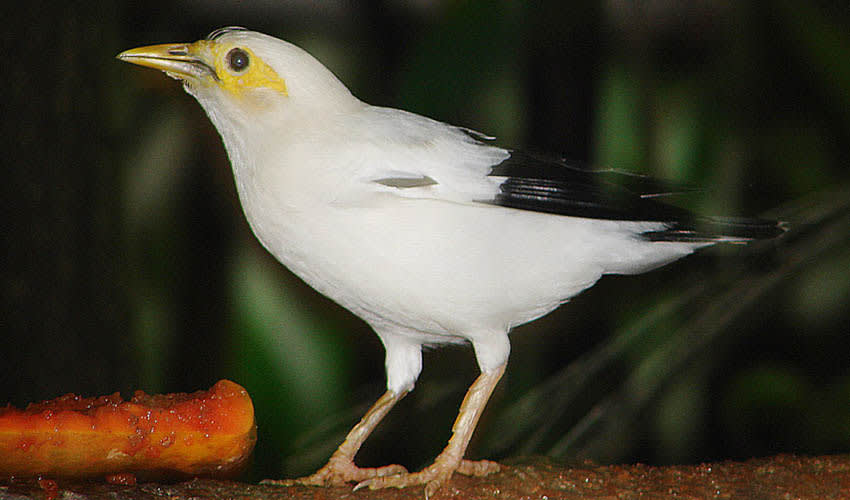


Black-winged myna
White but not albino

