


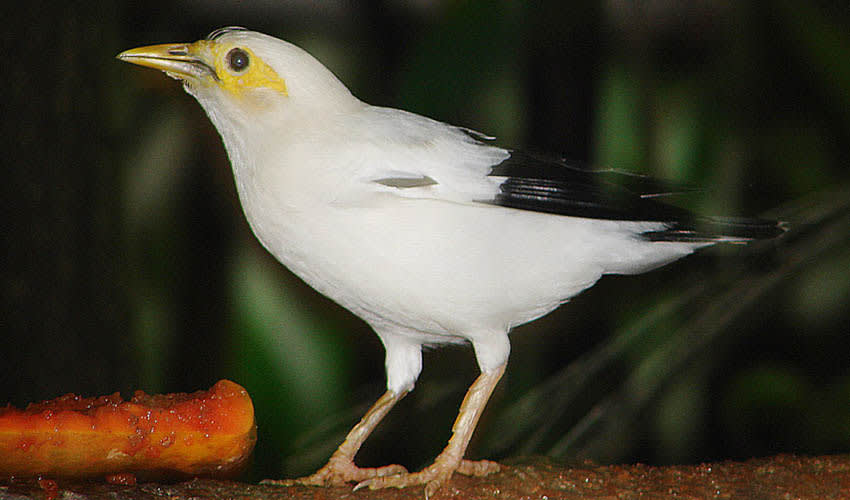
A striking and elegant bird native to Java and Bali in Indonesia. With its snow-white plumage, contrasting velvety black flight feathers and tail, and a bright yellow patch of bare skin around the eyes, it looks almost regal. Its slim crest and sharp bill add to its refined appearance, making it one of the most visually distinctive members of the myna family. Though it shares the confident posture and alert expressions typical of mynas, its coloration sets it apart from the darker, more common species found across Asia.
In the wild, black-winged mynas live in dry open woodlands, savannas, grasslands, and agricultural areas, often near scattered trees and shrubs. They forage mostly on the ground, picking up insects, fruit, seeds, and small invertebrates, hopping with inquisitive precision. Their calls range from soft whistles to raspy chatter — not as loud as their urban cousins, but still expressive and social. Like many starlings, they nest in tree hollows, sometimes taking advantage of old woodpecker holes or natural cavities. Pairs form close bonds and share parenting duties, keeping watch and bringing food to their nestlings until they fledged.
Sadly, despite its beauty, this species has become a symbol of Southeast Asian bird-trade crisis. Once common across parts of Java and Bali, the black-winged myna is now critically endangered, with wild populations reduced to only a tiny fraction of their former numbers. The main threat? Illegal trapping for the songbird and pet trade, where its rarity and beauty tragically increased demand. Habitat loss and competition for nest sites also play roles, but trapping has been the most devastating factor. Fortunately, conservation groups and breeding centers — including protected facilities in Indonesia — are working to rebuild populations and release birds into secure reserves.
Distribution
 Indonesia
 Singapore
Anything we've missed?
Help us improve this page by suggesting edits. Glory never dies!
Suggest an editGet to know me
Terrestrial / Aquatic
Altricial / Precocial
Polygamous / Monogamous
Dimorphic / Monomorphic (size)
Active: Diurnal / Nocturnal
Social behavior: Solitary / Pack / Herd
Diet: Carnivore / Herbivore / Omnivore / Piscivorous / Insectivore
Migratory: Yes / No
Domesticated: Yes / No
Dangerous: Yes / No




