Bucephala – Goldeneye (duck)
That high-pitched whirring flight sound? It’s so iconic hunters nicknamed them “whistlers”
Commonly known as the goldeneyes, this genus includes a small group of compact, handsome diving ducks found across North America and Eurasia. These birds are built like feathered submarines: round heads, short necks, sleek bodies, and strong legs set far back, perfect for powering underwater dives. Their name comes from their distinctive bright yellow eyes, which stand out against their polished plumage and alert expressions. Among them are the well-known common goldeneye, the Barrow’s goldeneye, and the tiny but charming bufflehead. Whether bobbing in icy northern lakes or cruising coastal bays in winter, Bucephala ducks carry a crisp, clean look — striking white patches, glossy dark heads (metallic green or purple depending on species), and a confident, upright posture.
Goldeneyes are expert divers, plunging beneath the surface to chase aquatic insects, crustaceans, mollusks, and small fish, especially in colder waters where many ducks wouldn’t dare linger. They swim with rapid kicks, wings tucked, moving through water with the brisk efficiency of a penguin in a hurry. On land, however, they can appear almost comically stiff-legged — diving ducks trade graceful waddling for underwater power. Their flight style is equally distinctive: fast, direct, and accompanied by a sharp whistling sound from their wings slicing the air. Many birdwatchers know a goldeneye is coming before they see one.
Breeding season reveals one of their most charming traits — they are tree-nesters. Goldeneyes seek natural cavities or nest boxes near northern lakes and rivers, and females often return to the same area year after year. Their ducklings are famously bold from day one: within hours of hatching, they leap from nest holes high above the ground like feathery popcorn, tumbling into the world with zero hesitation before paddling behind their mother. These broods can sometimes merge into “crèches” if multiple mothers share territory, turning ponds into bustling nurseries.

Species in this genus
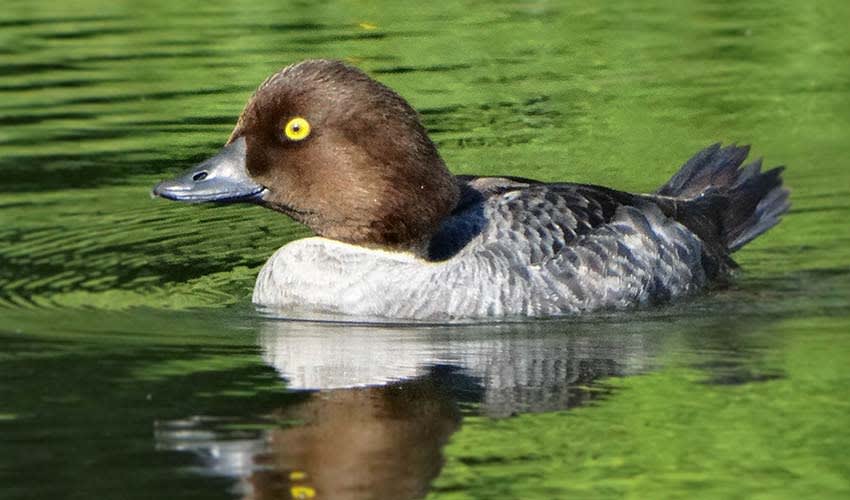


Common goldeneye
Crisp-feathered, fast-flying, and fearless in icy waters

