Bulweria
For long stretches they only come to land to breed—otherwise it’s sea, sky, and wind
Birds in this group are slim, dark, and long-winged, built for smooth, effortless flight rather than flashy displays. When seen at sea, they often appear as dark silhouettes gliding low over the waves, with slow wingbeats and long glides that make them seem calm and unhurried. Their bodies are lightweight, their wings narrow and pointed, and their tails slightly forked, giving them a graceful, balanced look in the air. Bulweria birds are true ocean travelers, spending most of their lives far from land and only returning to shore to breed.
What sets Bulweria apart from many other seabird groups is its subtlety. These birds do not gather in huge, noisy colonies like some seabirds, nor do they rely on bright colors or dramatic patterns. Instead, they are understated and mysterious. The genus includes species such as Bulwer’s petrel and Jouanin’s petrel, which live mainly in warm oceans. Compared to other petrels, Bulweria species tend to be more slender and delicate in appearance, with a smooth, streamlined shape that seems perfectly matched to long-distance gliding. Their dark plumage helps them blend into the ocean surface, especially at dusk or under cloudy skies, making them surprisingly hard to spot despite their wide-ranging travels.
Life for a Bulweria petrel is mostly about the sea. These birds feed on small fish, squid, and other marine creatures, often picking food from the surface or just below it. They are patient foragers, drifting and gliding over productive waters until the right moment to strike. Like other ocean birds, they are well adapted to life far from fresh water, able to handle salty conditions and long periods away from land. When breeding season arrives, Bulweria species show a very different side of their lives. They return to remote islands, often nesting in rocky crevices, burrows, or steep slopes where few predators can reach.

Species in this genus
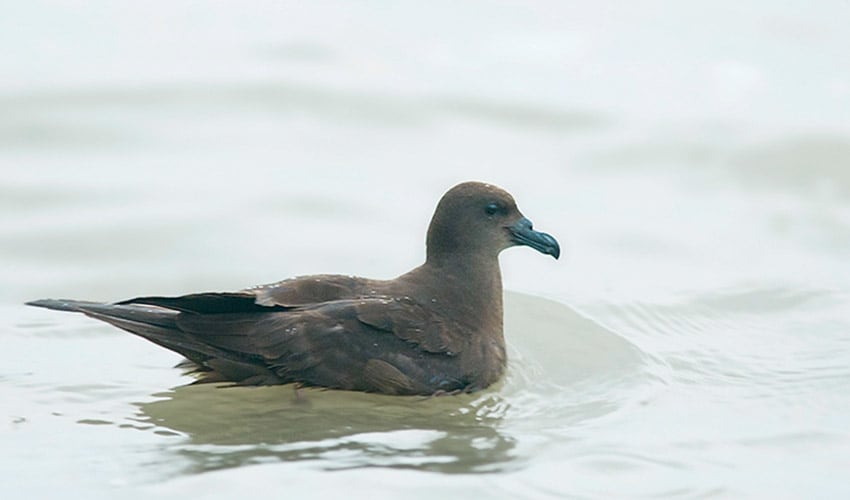


Jouanin’s petrel
One of the ocean’s “mystery birds”

