Bungarus – Kraits
Kraits are cannibalistic, often feeding on smaller snakes—including their own species
Better known as the kraits, it is a fascinating and fearsome group of snakes renowned for their sleek beauty, potent venom, and secretive nocturnal habits. Found across South and Southeast Asia, from India and Bangladesh to Thailand, Indonesia, and southern China, kraits are members of the Elapidae family, which also includes cobras and coral snakes. Though elegant and glossy in appearance, Bungarus species rank among the most venomous snakes in the world
Kraits are generally medium-sized snakes, ranging from 1 to 2 meters (3 to 6.5 feet) in length. They are instantly recognizable by their smooth, shiny scales, rounded heads, and distinctive banded patterns—usually alternating stripes of black and white or bluish-gray. Their sleek, cylindrical bodies gleam under light, giving them a polished, almost metallic appearance. The name Bungarus itself is derived from an Indian term for these banded snakes, reflecting their strong presence in South Asian folklore and rural life. Despite their deadly potential, kraits are typically shy and non-aggressive, preferring to avoid confrontation whenever possible.
Most kraits are nocturnal, spending the day hidden in burrows, under rocks, or within piles of leaves, emerging at night to hunt. Their diet is specialized—they primarily eat other snakes, including smaller kraits, along with lizards, frogs, and occasionally rodents. This snake-eating behavior, called ophiophagy, is one reason kraits possess such potent venom—it must act fast to subdue prey that can fight back.
The venom of kraits is extremely neurotoxic, among the most powerful of any snake. It works by paralyzing the nervous system, leading to respiratory failure if left untreated. Despite their toxicity, kraits are not aggressive and rarely bite unless provoked or accidentally handled—most incidents occur when people unknowingly step on or disturb them at night. Interestingly, their bite is often painless and subtle, meaning victims may not realize they’ve been bitten until symptoms appear hours later.

Species in this genus
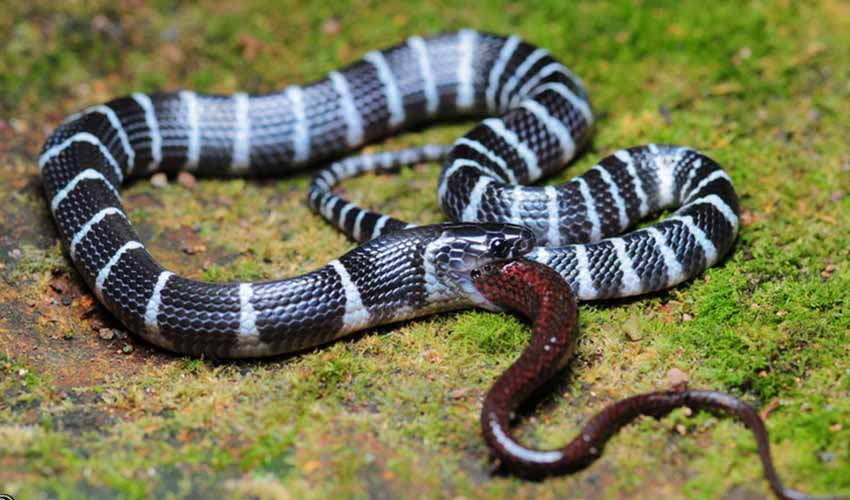


Many-banded krait
Its distinct black-and-white pattern is a warning sign to predators—beautiful but deadly

Banded krait
Believed to guard hidden treasures or sacred sites due to its rare and majestic appearance

