Callosciurus – Oriental tree squirrels
Some of the most colorful squirrels on Earth
A vibrant and widespread group of squirrels found throughout Southeast Asia, southern China, the Himalayas, and parts of Indonesia and the Philippines. Known for their striking colors, adaptability, and energetic behavior, these squirrels inhabit a range of environments, from dense rainforests and mangroves to gardens, plantations, and urban parks. With over a dozen recognized species—some plain, others brilliantly patterned—it is one of the most diverse and visually interesting squirrel genera in the world.
One of the most remarkable features of these squirrels is the variety in their appearance. Depending on the species, their fur can be olive, chestnut, jet black, bright red, yellow, orange, or even a mix of contrasting colors. Their long, bushy tails help with balance and communication and often match or contrast with the body’s coloration, adding even more visual flair.
These squirrels are primarily arboreal, spending most of their time in trees where they forage, rest, and build nests. They are agile climbers that can leap from branch to branch with impressive speed, often staying high above the ground to avoid predators. Their nests, called dreys, are woven from leaves, twigs, and shredded bark and are typically placed in the forks of trees for stability. Some species are more tolerant of human-modified landscapes than others and can be seen scampering across rooftops, telephone wires, and fruiting trees in urban areas.
Their diet is varied and flexible. They eat fruits, seeds, nuts, young leaves, flowers, insects, and sometimes bird eggs. Their feeding habits make them important agents of seed dispersal—a crucial ecological role in tropical forests. By caching food or dropping seeds from treetops, they help encourage new plant growth and promote forest regeneration. In agricultural areas, they may occasionally become crop pests, especially in orchards or coconut plantations, but their ecological benefits in natural ecosystems are significant.

Species in this genus
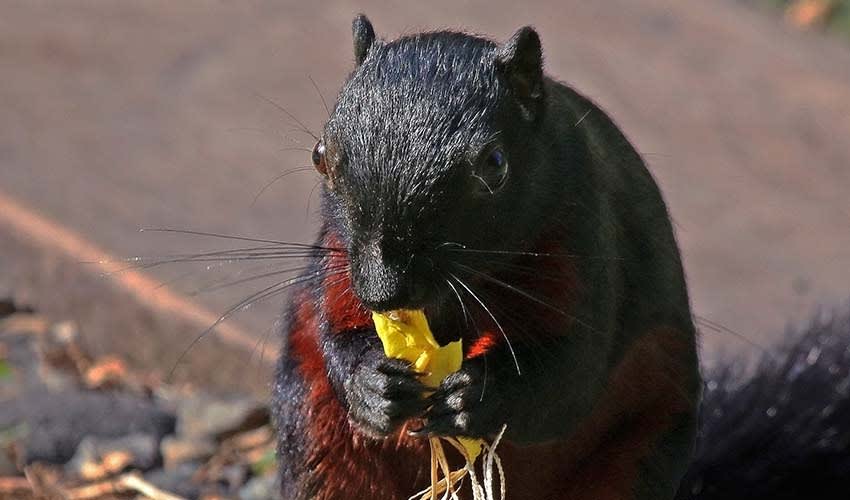


Prevost’s squirrel
One of the most colorful squirrels on Earth

