Calyptorhynchus
Among the largest parrots in Australia, with powerful wings and long tails
These birds are native to Australia and are easily recognized by their dark, glossy feathers, powerful bodies, and dramatic presence. Most species in this genus have black or very dark brown plumage accented with bold splashes of red, yellow, or white on the tail and cheeks. They are among the largest parrots in Australia, with broad wings, long tails, and strong, curved beaks built for handling tough foods.
One of the defining characteristics of Calyptorhynchus cockatoos is their strong connection to native habitats. They rely heavily on forests, woodlands, and heathlands, where they feed on seeds, nuts, fruits, and sometimes insects. Their beaks are specially shaped to crack open hard seed pods from plants like eucalyptus, banksia, and sheoak. While feeding, they often hold food with one foot and use the beak with impressive precision. Their foraging habits can leave noticeable signs, such as chewed seed pods and stripped branches beneath feeding trees.
Social behavior plays a major role in the lives of Calyptorhynchus cockatoos. They are usually seen in pairs or small family groups, though larger flocks may form outside the breeding season. These birds are highly vocal, using loud, distinctive calls to communicate across long distances. Mated pairs form strong, long-term bonds and often remain together for many years.
What sets the genus Calyptorhynchus apart from other cockatoos is their specialization and slow life cycle. They breed slowly, often raising only one chick at a time, and depend on very old trees that take decades or even centuries to develop suitable nesting hollows. This makes them especially vulnerable to habitat loss. Several species within the genus are now threatened or endangered due to land clearing, logging, and changes in food availability.

Species in this genus


Glossy black cockatoo
Its feathers can look shiny or “polished” in sunlight, which inspired its name
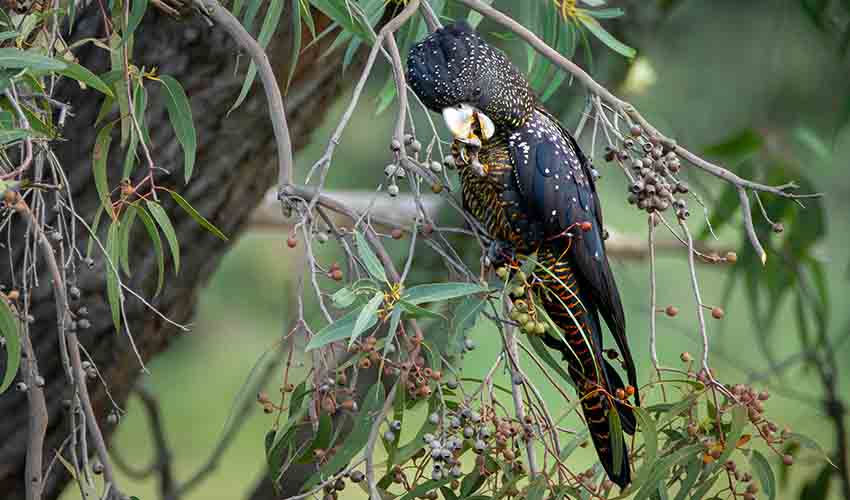
Red-tailed black cockatoo
Females don’t have red tails—instead, theirs are orange or yellow with spots, making them easy to tell apart

