Chinchilla
Have the densest fur of any land mammal—up to 60–80 hairs grow from a single follicle (humans have just one per follicle!)
The genus Chinchilla includes two of the most famously soft-furred mammals in the world: the long-tailed chinchilla and the short-tailed chinchilla. Both species are native to the high Andes of Chile, Peru, Bolivia, and Argentina, where they live among rocky slopes, cliffs, and cold mountain scrublands. Wild chinchillas are smaller and more compact than the domesticated pets many people know, but they share the same key traits—big round ears, expressive eyes, long whiskers, and incredibly dense fur. The genus is well known for producing the densest fur of any land mammal, an adaptation that helps these animals survive freezing nights in the Andes.
Chinchillas are specialized for life in harsh mountain environments. Their bodies are designed for agility—long hind legs for jumping between rocks, a flexible spine for squeezing into crevices, and a thick tail that helps them balance while leaping. They are social animals, often living in colonies that can include dozens of individuals. These groups give them protection from predators such as foxes, owls, and mountain cats. Being mostly crepuscular or nocturnal, chinchillas spend their waking hours foraging for shrubs, grasses, seeds, and bark. Their sharp teeth grow continuously, allowing them to chew tough plants without wearing down their enamel.
One of the most iconic traits of Chinchilla species is their dust-bathing behavior. Instead of using water to keep clean, they roll vigorously in fine volcanic dust or soil, which removes oil and moisture from their fur. Because their fur is so dense, getting wet can lead to fungal infections or hypothermia, so dust baths are essential for their health. This unique behavior is now well-known thanks to pet chinchillas, but it originated as a crucial survival strategy in their cold, dry homeland.
Sadly, both species in the genus Chinchilla have faced severe population declines. Their luxury-quality fur led to mass hunting throughout the 19th and early 20th centuries. Millions were trapped, and both species were pushed to the brink of extinction.

Species in this genus
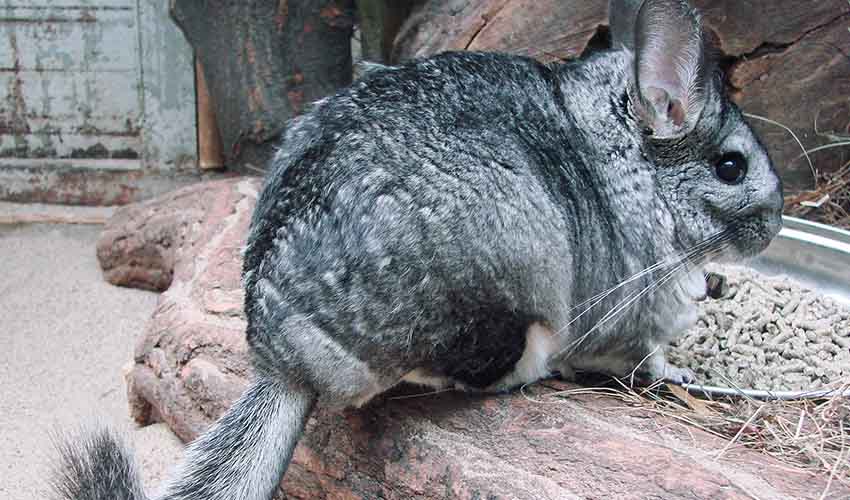


Long-tailed chinchilla
A dust bath is their spa day

Short-tailed chinchilla
Its fur is so thick that fleas can’t survive in it

