Chitra – Narrow-headed softshell turtles
That long nose isn’t just for looks — it allows them to breathe while nearly fully buried
A remarkable group of large, river-dwelling turtles found in South and Southeast Asia. They are part of the softshell turtle family — but they take the softshell idea to an extreme. Their bodies are flattened like living river stones, their shells smooth and flexible, and their remarkably long, narrow snouts end in a snorkel-like nose. This sleek design makes them look more like aquatic oddities than traditional turtles, and it helps them slip through fast-flowing rivers and disappear under sandy bottoms with ease.
Chitra turtles are true river specialists, inhabiting large waterways such as the Ganges, Brahmaputra, Irrawaddy, and Mekong systems, depending on the species. They prefer deep, sandy-bottomed rivers, where they bury themselves with only their nostrils and eyes exposed. Hidden like this, they wait patiently to ambush prey — a hunting style that relies on stillness, stealth, and sudden bursts of speed. Their diet is primarily fish, but they also take crustaceans, mollusks, and occasionally water insects or small vertebrates. Their long necks act like spring-loaded spears, striking quickly when prey swims too close.
Despite their size — some species can reach over a meter in length — these turtles are surprisingly elusive. They surface quietly to breathe, often using just the tip of the snout, and can stay submerged for long periods. Like the best underwater hunters, they prefer silence, sand, and shadows over open water. Their shells often match the riverbed, patterned with subtle mottling and lines that mimic ripples and silt.
Chitra turtles nest on sandy riverbanks, where females dig deep chambers for their eggs. This life cycle ties them tightly to undisturbed rivers — a challenge in modern times. These turtles are now highly threatened, facing pressures from sand mining, river damming, fishing nets, habitat loss, and illegal trade. Their eggs and meat have traditionally been harvested, and their specialized habitat means they don’t adapt easily when rivers change.

Species in this genus
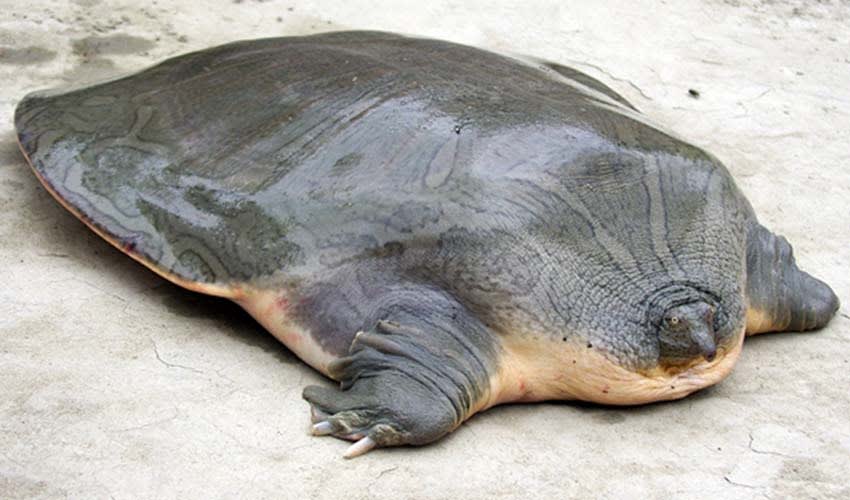


Indian narrow-headed softshell turtle
Can remain submerged for long periods, surfacing quietly with only the tip of their snout exposed

