Chlidonias – Marsh terns
Many of them grab food with quick surface dips rather than dramatic plunge-dives
A small group of terns that feel like the “reed-country” cousins of the sleek ocean terns people picture at the beach. Instead of spending most of their time over salty waves, marsh terns are strongly tied to freshwater wetlands—marshes, shallow lakes, flooded fields, and wide river edges. They’re generally slimmer, softer-looking, and more buoyant in flight than many sea-going terns, with wings that seem made for floating and weaving low over water plants. In breeding season, several species develop a striking dark head and body (often blackish), which can make them look like little flying shadows skimming over bright green reeds.
Many coastal terns hunt by plunging from height into open water like feathered darts. Chlidonias terns usually don’t do that dramatic dive. Instead, they often hunt with a graceful dip-and-snatch style—hovering, gliding, and picking food from the surface or just below it. They’ll take insects, small fish, and other tiny wetland creatures, and they’re famous for grabbing dragonflies and other flying insects right out of the air. Watching a marsh tern hunt can feel like watching a kite: it tilts, pauses, and then flicks down to pluck something with perfect timing. They also tend to fly lower and more loosely than many ocean terns, often in a busy, zigzag pattern over lily pads and reed tops, as if they’re “reading” the water for movement.
Their nesting habits are another big difference. Rather than nesting on bare sand or rocky shorelines like many terns, marsh terns often place nests on floating vegetation or low platforms in thick marsh plants. That sounds cozy—until you remember that wetlands rise and fall. These birds are constantly making the best of a moving world, and their nesting sites can be vulnerable to flooding, wind, or changes in water level. To deal with this, marsh terns often choose spots with a natural cushion of plants and may nest in loose colonies, where many pairs keep watch and raise the alarm if danger appears.

Species in this genus
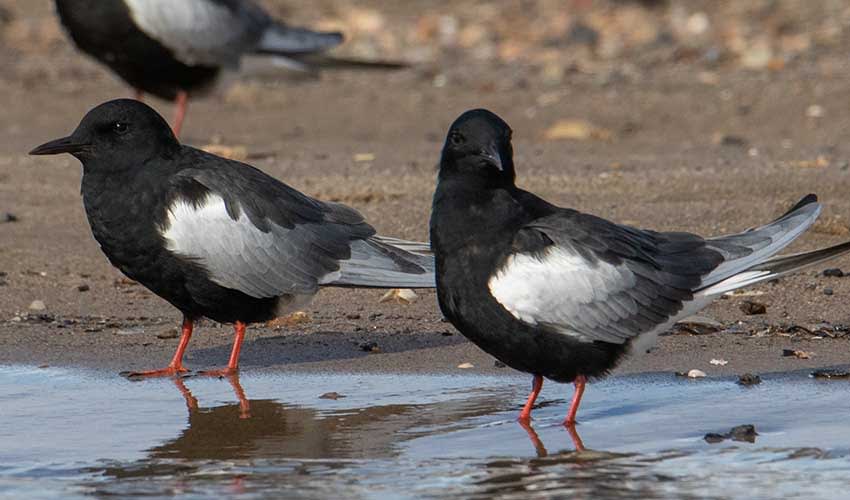


White-winged tern
A single flock can clear out thousands of mosquitoes and agricultural pests in a single afternoon

Black-fronted tern
Famous for breeding on New Zealand’s braided rivers, which is unusual for terns.

