Harpyionycteris
Their skull shape is so distinctive that scientists once thought they belonged to a completely different bat family
This small genus consists of only a few rare species found primarily in Southeast Asia and Oceania, including the Philippines, Indonesia, and Papua New Guinea. Despite their scarcity and secretive habits, these bats are striking examples of evolutionary adaptation—combining the typical fruit-eating behavior of megabats with unique cranial and dental features that set them apart from all other bat species.
At first glance, harpy fruit bats appear similar to other medium-sized fruit bats, with large eyes, pointed ears, and a doglike face typical of flying foxes. However, closer examination reveals several distinctive traits. They have short, broad muzzles, powerful jaws, and unusually shaped skulls that give them a somewhat “chunky” facial profile—features that earned them the name Harpyionycteris, meaning “harpy bat,” after the mythical harpies known for their strength. Their teeth are sharply cusped and closely packed, unlike the smoother molars of most fruit bats, suggesting a specialized diet. Their fur is thick and soft, usually dark brown or grayish, with lighter shades on the belly. Their wings are relatively short but broad, built for slow, controlled flight through dense forest vegetation. These adaptations make them well-suited for life in humid, closed-canopy tropical forests, where maneuverability is more valuable than speed.
What truly sets Harpyionycteris apart from other fruit bats is its unique feeding adaptation. Most fruit bats rely on soft, juicy fruits like figs, but harpy fruit bats have evolved to feed on tougher fruits, seeds, and even harder plant materials. Their robust jaws and specialized teeth allow them to crush fruits that other bats cannot eat, possibly giving them access to less competitive food sources. Researchers believe they play a significant ecological role as seed dispersers, particularly for fruit species that require mechanical crushing to release their seeds. Their feeding habits help maintain forest diversity and regeneration, especially in isolated island ecosystems where they are often among the few large frugivores present.
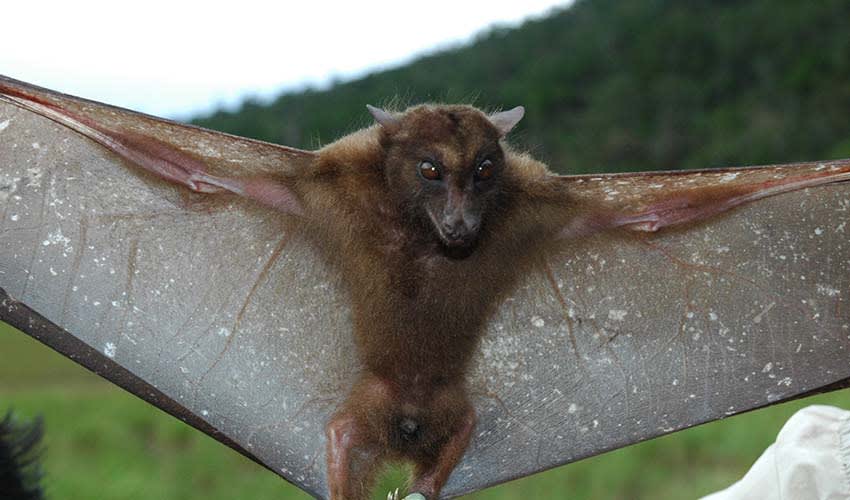
Species in this genus


Harpy fruit bat
Remains one of the least-studied fruit bats in the world

