Marmosa – Mouse opossums
Can look so mouse-like that people don’t realize they’re marsupials
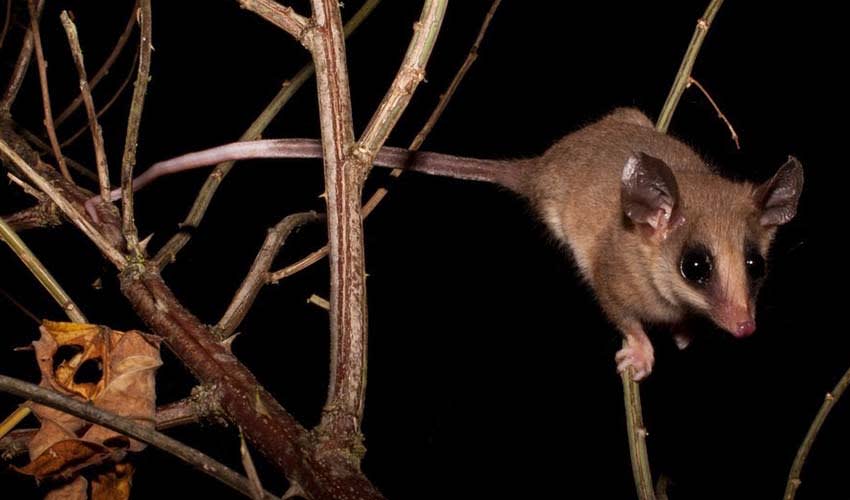
Tiny South American marsupials that live like little night-time gymnasts. They’re small and light, with pointed snouts, big dark eyes built for low light, and delicate ears that seem to catch every rustle. Their bodies are slender, their legs are quick, and their tails are long, thin, and flexible—more like balancing ropes than fluffy tails. Many have soft gray-brown fur with paler bellies, a practical color scheme for blending into bark, dry leaves, and shadowy vegetation.
These aren’t bulky ground scavengers; they’re small forest foragers that spend much of their time in shrubs, vine tangles, and low-to-mid levels of trees. That slender build is a survival advantage: it lets them travel on thin branches without shaking the whole plant and squeeze into tiny hideouts that bigger animals can’t use. Another key difference is how “insect-hunter” many of them are. While they’ll happily eat fruit when it’s available, a lot of their nightly work involves tracking insects and other small prey using smell, hearing, and quick grabs. In other words, they’re part snack-seeker, part tiny predator, and part canopy explorer.
During daylight, mouse opossums often hide in snug shelters—leaf nests, vine knots, tree hollows, or tucked pockets of vegetation—places that keep them safe and help them conserve warmth and energy. After sunset, they begin their patrols, moving in short bursts, pausing frequently to listen and sniff. The forest at night is full of danger, so many mouse opossums rely on stillness as much as speed. If startled, they may freeze and let camouflage do the work, or slip quietly into dense leaves rather than sprint across open ground. Their long tails help with balance during awkward reaches and quick turns, and the tail’s bare, grippy surface can give extra stability when they’re climbing or stretching for food.

Species in this genus


Little woolly mouse opossum
Can live from lowland rainforest up into cooler, misty cloud forest zones

Robinson’s mouse opossum
Tiny enough to treat vine tangles like highways—moving through “forest clutter” that would stop bigger mammals

Tate’s woolly mouse opossum
Often forages with a stealth rhythm: creep, pause to sniff, pause to listen—then grab

Woolly mouse opossum
Its “woolly” coat gives it a plush look compared with many sleeker mouse opossums

