Megascops – Screech owls
Can live surprisingly close to people and may raise their young in backyard nest boxes
Despite their name, these owls rarely produce an actual screech. Instead, they are known for soft trills, whistles, and trembling calls that drift through the night. Their compact size, rounded bodies, and short tails give them a sturdy appearance, while their small ear tufts create an alert, expressive look. Screech owls come in different color forms, usually gray or reddish-brown, which helps them blend seamlessly into tree bark and forest surroundings.
One of the most remarkable traits of Megascops owls is their ability to stay hidden in plain sight. During the day, they roost quietly in tree cavities, dense foliage, or even nest boxes, relying on their excellent camouflage. When perched, they can pull their feathers close and stretch their bodies upward to resemble broken branches. This behavior makes them extremely difficult to spot, even when they are only a few feet away.
Screech owls are highly adaptable and can live in a wide range of habitats. While forests and woodlands are their natural homes, many species thrive in parks, orchards, and suburban areas with enough trees. They are flexible hunters, feeding on insects, small mammals, reptiles, amphibians, and small birds. This varied diet allows them to adjust to seasonal changes and different environments. They usually hunt from a perch, swooping down silently to catch prey with great accuracy. Their flight is nearly silent, thanks to specially shaped feathers that reduce sound.
What distinguishes Megascops owls from other small owls is their social and vocal behavior. Their calls are often used to communicate with mates, defend territory, or stay in contact with family members. Some calls sound like bouncing balls or gentle horse-like whinnies, adding a mysterious charm to nighttime forests. During breeding season, many species form strong pair bonds, and both parents take part in caring for the young. They do not build nests but instead use natural tree holes or abandoned cavities, making old trees especially important for their survival.

Species in this genus
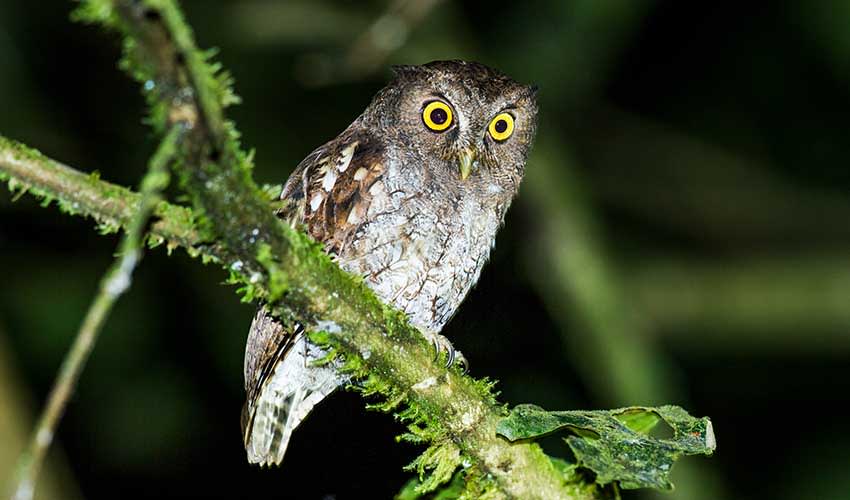


Middle American screech owl
Despite its name, its calls are often described as musical or trilling rather than screeching

