Melanitta – Scoters
Chunky, strong-flying sea ducks that love cold coastal waters
Big, sea-loving ducks that often look like dark shapes bobbing on cold northern oceans. At a distance, a flock of scoters can appear as a black band just beyond the surf, but a closer look reveals birds that are powerful, tough, and surprisingly stylish. Most adult males are almost completely black, set off by bright, swollen-looking bills that can glow orange, yellow, or white in good light. Females and young birds are a softer chocolate-brown with pale patches on the face.
What really sets scoters apart from many other ducks is how closely they are tied to the sea and its shellfish. All scoters are diving specialists. They plunge under rough coastal water, sometimes in strong waves, to pry mussels, clams, and other hard-shelled creatures from rocks and sand. They swallow their prey whole and rely on powerful gizzards to crush the shells. This diet shapes where they live: in winter, scoters gather off rocky coasts and sandy bays where shellfish beds are rich, often forming huge flocks that can number into the thousands.
Their annual routine is a long-distance loop between remote northern breeding grounds and coastal wintering areas. Scoters nest on freshwater lakes, ponds, and boggy lowlands across the far north, from tundra regions to remote boreal forests.
Even though the different scoter species—such as black scoter, surf scoter, and velvet/white-winged scoter—have their own details in bill shape and markings, they share a similar overall lifestyle: chunky bodies, stiff tails, strong wings, and a preference for rough water that would send many other ducks running for shelter. Taking off from the ocean, they often patter along the surface for several meters, splashing and flapping before finally lifting into the air. At sea, they are mostly quiet, but on breeding grounds, males give quirky whistles and croaks instead of classic quacks.

Species in this genus
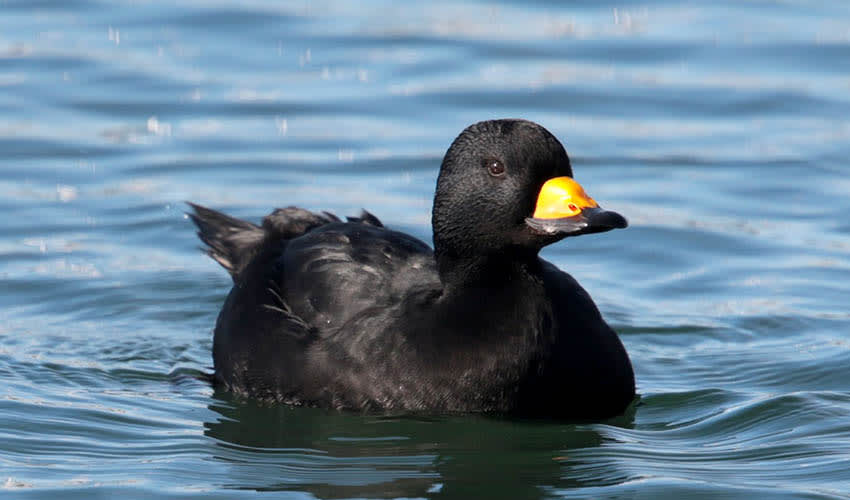


Black scoter
Scan the sea on a cold day, and that “black smudge” past the breakers might be a raft of scoters

