Menelikornis
Instead of flying everywhere, they often move by hopping, climbing, and leaping through branches
A small genus of turacos found in the Horn of Africa, which includes just two species: the white-cheeked turaco and Ruspoli’s turaco. Even among turacos—birds already known for looking bold and exotic—Menelikornis stands out because it lives in landscapes that don’t always match the “rainforest bird” stereotype. These birds are built for life in trees, with strong feet for gripping branches and a long tail that helps with balance, but their world is often highland woodland, juniper forest, and dry, broken forest edges rather than dripping jungle. Their overall look is classic turaco: mostly green body tones, a neat crest, and flashes of bright color when they move.
A big part of what makes Menelikornis special is how “tree-walking” it is. These birds don’t spend their day soaring or doing long flights; they travel by hopping, running, and leaping through the canopy like feathered parkour specialists. When they do fly, it’s usually quick and purposeful—more of a dash between treetops than a long journey across open sky. Their diet fits that lifestyle too: they’re big fruit fans, and they’ll also take buds, flowers, and the occasional insect. That makes them important movers of seeds, because every fruit meal is also a chance for the bird to carry seeds to new places. Compared with many other turacos that live in richer, wetter forests, they often have to work around seasonal changes in food, shifting their routes through the trees as different plants fruit at different times.
The two members of the genus also show how one “blueprint” can adapt to different neighborhoods. The white-cheeked turaco is strongly tied to higher, cooler forests and woodlands, where tall trees and dense cover create a layered canopy. Ruspoli’s turaco, in contrast, is more restricted and localized, living in drier woodland and forest edges in southern Ethiopia. That difference in habitat shapes their daily rhythm: where the forest is denser, movement can be more hidden and steady; where it’s drier and more open, staying alert and choosing cover carefully matters even more.

Species in this genus
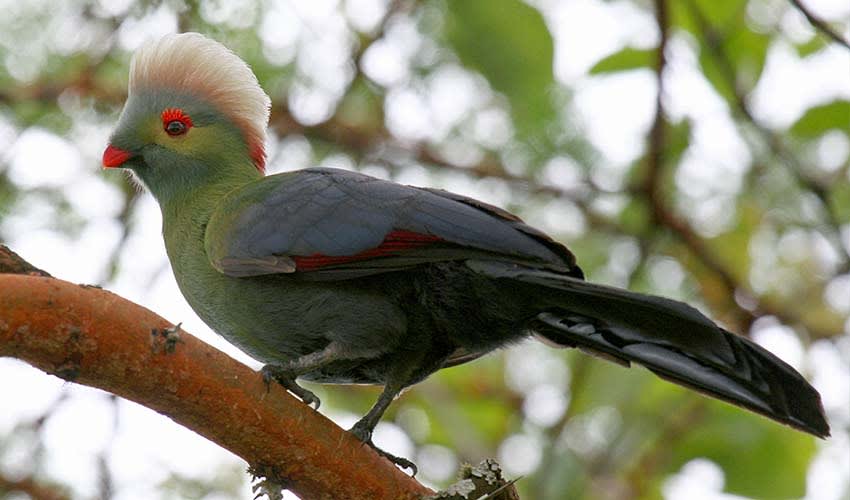


Ruspoli’s turaco
That long tail helps it stick tricky landings and turn fast in branches

