Microcavia – Mountain cavies
Can survive in environments where few mammals can, from cold Andean plateaus to dry Patagonian scrublands
Belonging to the cavy family (Caviidae), these animals are close relatives of guinea pigs (Cavia) but have evolved unique traits that help them thrive in dry, rocky, and high-altitude environments. Though less famous than their domestic cousins, mountain cavies are remarkable examples of how adaptability and quiet resilience allow life to flourish even in harsh conditions.
Mountain cavies resemble guinea pigs but have shorter legs, compact bodies, and shorter ears, giving them a stockier, more rounded appearance. Their fur is dense and soft, usually grayish-brown or sandy-colored, blending perfectly with the stony, scrub-covered landscapes they inhabit. This coloration acts as effective camouflage against predators such as foxes, owls, and hawks. Their tails are either very short or absent—a common trait among cavies—and their feet are padded with small claws adapted for digging among rocks or loose soil. Unlike guinea pigs, which have a more domesticated look, mountain cavies have a wild, alert expression with large dark eyes and constantly twitching noses that scan for scents of danger.
Mountain cavies are herbivorous, feeding mostly on grasses, leaves, seeds, and desert shrubs. In dry environments where food can be scarce, they have adapted to extract moisture from their diet, reducing their need for direct water intake. Their teeth grow continuously, an adaptation that allows them to chew through tough, fibrous vegetation without wearing them down. Like other cavies, they are efficient digesters, with a specialized gut that helps break down cellulose from plants. They practice coprophagy—re-ingesting partially digested pellets to extract additional nutrients, much like rabbits do. This trait is essential for survival in nutrient-poor environments.
Behaviorally, they are generally social and cautious. They often live in small family groups or loose colonies, sharing burrows or hiding spots. Within these groups, individuals communicate through soft squeaks, purrs, and whistles, which help coordinate foraging and alert others to danger. When threatened, they may emit sharp alarm calls before darting into cover. Their movements are quick and precise, well-suited to rocky terrains where they can slip between crevices to escape predators.

Species in this genus
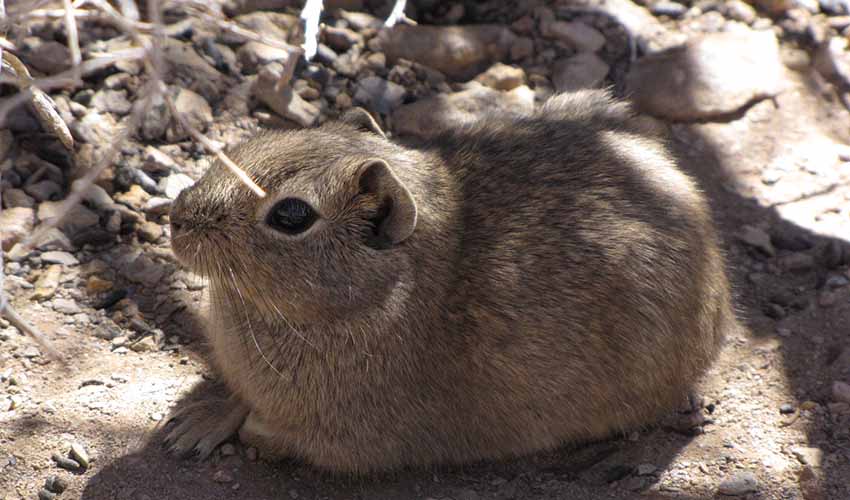


Southern mountain cavy
A small mammal perfectly designed for endurance in one of the toughest environments on Earth

