Neotis
Among the heaviest birds that can still fly
These birds are found mainly in Africa, with a few species extending into parts of Asia, and they are best known for their impressive size, long legs, and powerful presence. Members of this genus, such as the kori bustard and the great Indian bustard, can weigh as much as a small dog, making them some of the heaviest flying birds alive. Even though they can fly, they prefer walking, spending most of their time striding slowly through grasslands and dry plains with a calm, confident attitude.
What makes Neotis bustards stand out from many other large birds is how grounded they are, both literally and behaviorally. They rely on strong legs rather than constant flight, using it mainly for escape or short-distance movement. Their bodies are broad and solid, their necks thick, and their wings wide, which gives them a powerful but slightly awkward look when they finally take off. On the ground, however, they are graceful in their own way, moving steadily and blending surprisingly well into dry landscapes thanks to their earthy colors of brown, gray, and cream. This camouflage helps them stay hidden from predators in open areas where there are few places to hide.
Another defining feature of the genus Neotis is the dramatic difference between males and females. Males are much larger and heavier, and they often have bolder markings, thicker necks, and more dramatic displays. During breeding season, males perform eye-catching courtship behaviors that can include puffing up their feathers, raising their necks, spreading their wings, and making deep booming or grunting sounds. These displays are meant to impress females and to warn other males to keep their distance. Females, on the other hand, are smaller and more modest in color, which helps them stay hidden while nesting on the ground.

Species in this genus
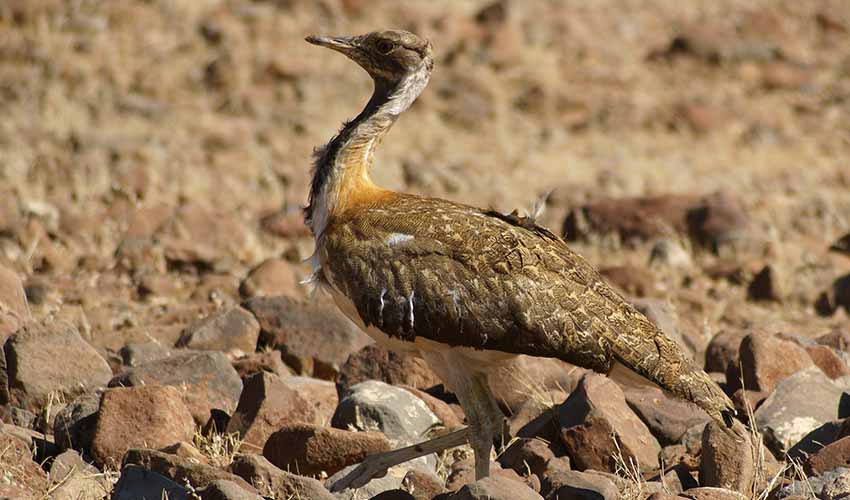


Ludwig’s bustard
Most of its travel is on foot—slow, steady, and alert—like it’s patrolling its territory

