Paraclaravis
They’re famous for being ridiculously hard to see
These birds belong to a small lineage of ground doves native to Central and South America, and they are famous not for how often they are seen, but for how rarely. Several species in this genus are considered extremely rare or possibly extinct, making Paraclaravis a symbol of how easily small, quiet birds can slip from human awareness. Unlike many pigeons that thrive near people or announce themselves loudly, Paraclaravis doves live discreet lives in dense forests, where their soft colours and secretive habits help them remain hidden.
Members of the genus Paraclaravis are small to medium-sized doves with compact bodies, short legs, and rounded wings. Their plumage is typically subtle and elegant rather than flashy, often dominated by greys, browns, and soft purples that blend well with shadowy forest floors. Males of some species were described as having beautiful iridescent purple or violet patches on the wings or shoulders, which could flash briefly in sunlight before vanishing again into shade. Females tend to be plainer, an adaptation that likely helps with camouflage while nesting. Overall, these birds were built more for slipping quietly through undergrowth than for long, sustained flights.
Ecologically, Paraclaravis species are believed to be forest-floor specialists. They likely spent much of their time walking rather than flying, searching for fallen seeds, fruits, and small plant material among leaf litter. Their preferred habitats included humid lowland forests, foothills, and bamboo-rich environments, which produce abundant seed crops but are also some of the most threatened ecosystems in the Neotropics. Because these birds depended on intact forest structure and specific food sources, they were especially vulnerable to deforestation and habitat fragmentation. Once forests were cleared or disturbed, Paraclaravis doves may have had few alternative places to go.

Species in this genus
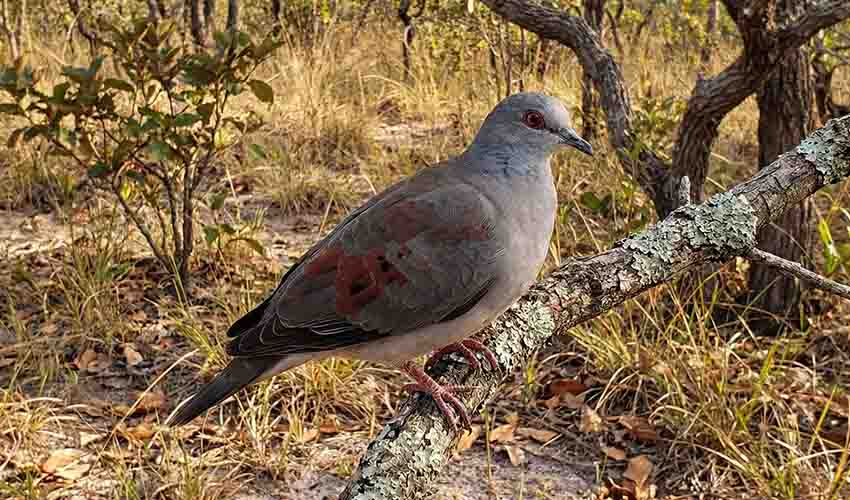


Purple-winged ground dove
Bamboo is basically its life plan

