Paraxerus – African bush squirrels
The squirrels most people picture when they think of African forests—small, alert, and endlessly busy
With more than a dozen recognized species, this genus is especially well known in the forests, woodlands, and savannas of East and southern Africa. These squirrels are most often seen darting along branches, rustling through shrubs, or perching alertly on tree trunks. Unlike the flashy giant squirrels of West Africa or the boldly striped ground squirrels, Paraxerus species are generally subtle in color but rich in personality and ecological importance.
African bush squirrels vary widely in appearance, but most share a compact, sturdy body, a moderately bushy tail, and coats that range from olive-brown and grayish to warm rufous tones. Many species have speckled fur, faint stripes, or distinct patches of color, though nothing as dramatic as the striping seen in ground squirrels. Their modest coloration works as excellent camouflage in leafy or bark-covered environments. One of the most widespread species, the Smith’s bush squirrel, is known for its ochre back and creamy underparts, while the red bush squirrel of East Africa displays a brighter reddish coat. The diversity of color forms across the genus reflects their adaptation to different habitats.
These squirrels are primarily arboreal, spending much of their time in trees where they forage, nest, and seek safety from predators. Their sharp claws and agile limbs allow them to navigate vertical surfaces with ease. However, they are also comfortable on the ground, especially when searching for fallen fruit or moving between shrubs. Most Paraxerus species are diurnal, meaning they are active during the day, often at dawn and late afternoon when conditions are cooler. Their nests, called dreys, are built in tree hollows or woven from leaves and twigs in dense foliage.

Species in this genus
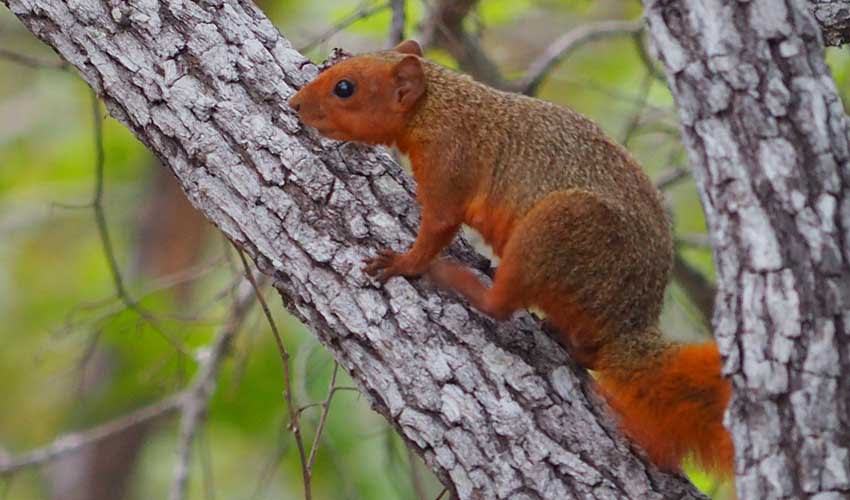


Red bush squirrel
Its bushy tail is often streaked with black and white hairs, giving it a speckled, smoky appearance

Smith’s bush squirrel
Tiny but tough — they hold their own against larger animals by being fast, alert, and great climbers

