Phalaropus – Phalarope
Can drink seawater and then “sneeze” the concentrated salt out through their nostrils to stay hydrated
While they belong to the sandpiper family, they are the “rebels” of the group because they’ve largely traded wading for swimming. What makes this genus truly distinct is that they have evolved to be “aquatic sandpipers,” featuring lobed toes—flat, fleshy scales on their feet that act like tiny paddles. This allows them to bob on the water like corks, a lifestyle choice that is almost unheard of for other shorebirds.
What makes the Phalaropus genus most famous in the biology world is its complete reversal of “traditional” roles. In these species, the females are larger, more brightly colored, and far more aggressive than the males. They are the ones who fight for territory and court the males. Once the eggs are laid, the female’s job is done; she often flies off to find a second mate, leaving the male to handle all the childcare. The males develop “brood patches” to keep the eggs warm and are solely responsible for protecting and raising the chicks.
The signature move of the entire genus is the “spinning vortex” feeding dance. If you see a small bird spinning in rapid, tight circles on the water’s surface—looking like a feathered ballerina gone rogue—you’ve found a phalarope. This spinning creates a miniature whirlpool that sucks tiny insects, brine shrimp, and larvae up from the depths and traps them in the center of the vortex. The bird then uses its needle-like bill to pluck the “trapped” food off the surface with incredible precision. It is one of the most specialized and efficient feeding strategies in nature.

Species in this genus
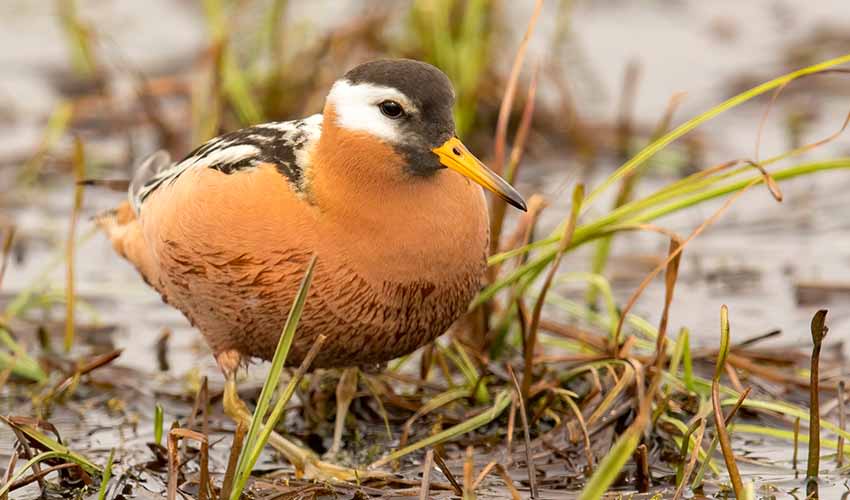


Red phalarope
Rugged enough to survive Arctic blizzards and mid-ocean gales that would ground much larger birds

