Polytelis
Compared to many parrots, they are relatively quiet and soft-voiced
These birds are often called long-tailed parrots, and they stand out from many other parrots for their streamlined shape and smooth, flowing flight. Their plumage is typically a blend of soft greens, yellows, and blues, sometimes highlighted with touches of red or pink depending on the species. With their slender build and refined look, Polytelis parrots appear almost delicate, yet they are strong fliers well adapted to open landscapes.
Members of the genus Polytelis are commonly found in open woodlands, riverine forests, and grassy areas near water sources. Unlike parrots that prefer dense forests, these birds thrive in more open habitats where they can fly easily between trees. They feed mainly on seeds, grains, fruits, and blossoms, often foraging on the ground and in trees. Their long tails help them balance while feeding and maneuver through branches. These parrots are often seen in small flocks or pairs, moving quietly and methodically as they search for food.
Social behavior in Polytelis parrots is generally calm and less noisy compared to many other parrot groups. Their calls are softer and more musical, giving them a gentle presence in their surroundings. Mated pairs form strong bonds and may stay together for many years. During the breeding season, they nest in tree hollows, often choosing sites near water. Both parents share the responsibility of caring for the young, bringing food, and protecting the nest.
What distinguishes the genus Polytelis from other parrots is its combination of elegance and specialization. Their long tails are among the longest relative to body size of any parrots, making them easily recognizable even from a distance. They are also known for their preference for quiet environments, avoiding heavily disturbed areas when possible. Some species within the genus have limited ranges, making them sensitive to changes in habitat.

Species in this genus
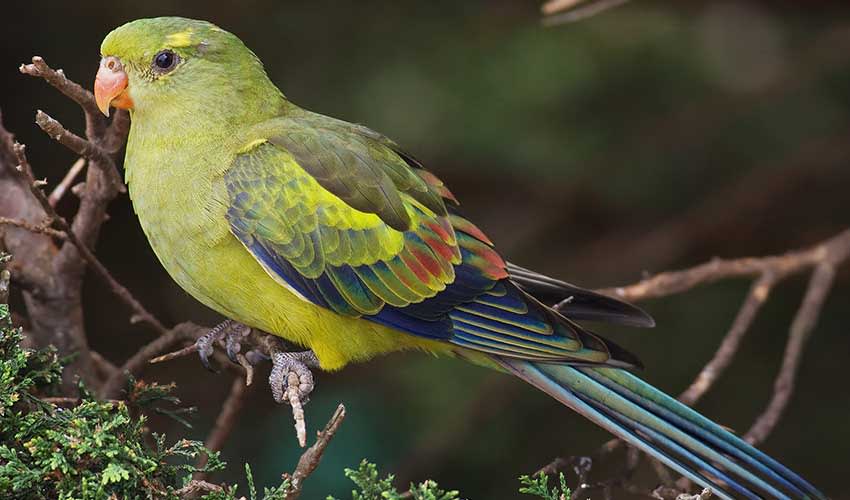


Regent parrot
Its bright yellow chest can look almost golden in sunlight

