Pseudibis
Where you find these ibises, you often find rich, healthy floodplain ecosystems
A small but remarkable group of ibises that carry an air of ancient elegance — tall, solemn, and unmistakably dignified birds of Asia’s wetlands and forested landscapes. With long, curved bills, stately necks, and strong wading legs, these birds seem like they walked straight out of an old temple carving — which makes sense, given they often share landscapes with historic ruins, rice paddies, and riverbank villages across the Indian subcontinent and Southeast Asia.
These ibises excel in the art of methodical foraging. With slow, deliberate steps, they probe muddy wetlands, shallow floodplains, mangrove edges, and seasonal ponds for frogs, crustaceans, insects, tiny fish, and aquatic invertebrates. Their curved bills act like elegant biological tweezers, perfectly adapted for feeling through mud and silt. While they may not be as flamboyantly colored as some of their ibis cousins, Pseudibis species make up for it in quiet charisma — the Black-headed Ibis in crisp white with its glossy dark head, the White-shouldered Ibis with its earthy browns and striking pale wing patches glowing like hidden badges of honor.
Behaviorally, Pseudibis birds are typically quiet, social, and slightly aloof, often seen in loose flocks or mixed wading groups. They roost in trees, nest colonially or in loose groups on tall branches, and are particularly fond of wetlands associated with traditional agriculture — a reminder that wildlife and human landscapes can coexist beautifully when given the chance. Sadly, that coexistence is under strain. The White-shouldered Ibis is critically endangered, suffering from habitat loss, disturbance, and decline in grazing and natural floodplain systems, while the Black-headed Ibis faces its own pressures from wetland conversion and pollution.

Species in this genus
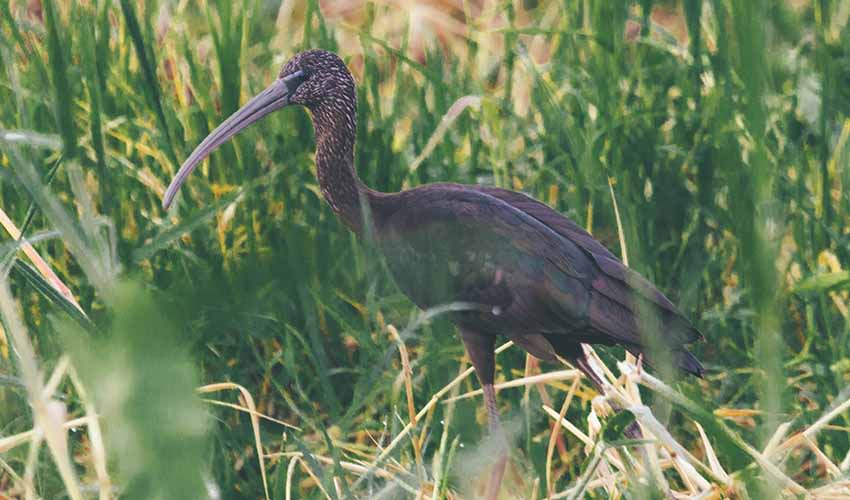


Giant ibis
Has a distinctly ancient look and is often described as a bird that “looks like it walked out of the Pleistocene”

White-shouldered ibis
One of the few ibis species that prefers dry forests over wetlands, making its ecology quite unusual

Red-naped ibis
It’s perfectly happy near villages, roads, and busy fields — the extrovert of the ibis world

