Spatula – Shovelers/Teals
Almost every member has a bill that’s wider at the tip—like a built-in scoop
Spatula ducks are small to medium-sized dabblers whose trademark is a wider, more spatula-shaped bill than most other ducks. In the four shoveler species (like the Northern shoveler, Australasian shoveler, Cape shoveler, and Red shoveler), the bill is really exaggerated: long and broad with fine comb-like edges that work like a built-in sieve. They swing their heads side to side through the water and strain out tiny crustaceans, insect larvae, and seeds, feeding where other ducks can’t compete as effectively. The six “teal-type” species (such as Blue-winged teal, cinnamon Teal, garganey, and blue-billed Teal) have slimmer bodies and more modestly widened bills, but you can still see the same basic spoon theme if you look closely.
One fun twist is that Spatula is a fairly new/old genus. Most of these birds used to be lumped into Anas, but genetic studies showed that “Anas” was a big mixed bag. When scientists untangled the family tree, they pulled out ten closely related species and put them back under the older name Spatula (Latin for “spoon”), with the Northern Shoveler as the type species. So if you see older books calling them Anas clypeata, Anas discors, Anas cyanoptera, etc., that’s the pre-split version of the story.
Geographically, Spatula ducks are almost everywhere there’s a decent wetland, except Antarctica. Northern Shovelers and Garganey breed across northern Eurasia and North America and migrate long distances to winter in Africa, South Asia, and the Americas. Australasian and Cape Shovelers work the Southern Hemisphere, while Blue-billed Teal live around African wetlands, and Blue-winged and Cinnamon Teal cover huge chunks of the Americas. Despite that global spread, they all stick to the same general formula: shallow water, lots of invertebrates and seeds, and enough vegetation for cover. They’re classic marsh, flooded-field, and pond ducks—just with upgraded bills.

Species in this genus
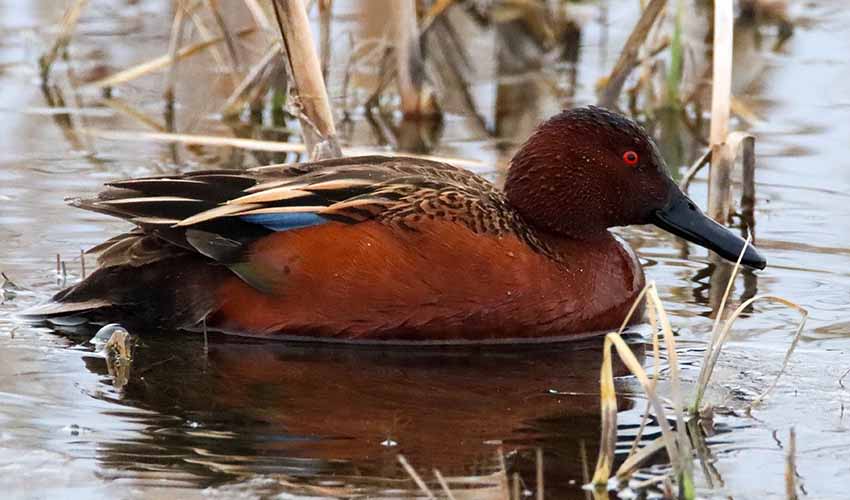


Cinnamon teal
Its speed and size make it harder for predators (and hunters) to track

Garganey
Known to cross the vast Sahara Desert in a single go during their migration

