Thinornis
Beach specialists on opposite sides of the Tasman
A tiny but special group of plovers that live at the very edge of the sea in just two corners of the world. These are small shorebirds with round bodies, short bills, and strong legs, built for running along beaches and wave platforms. At first glance, they look cute and simple, but they’re actually some of the most threatened beach birds on Earth, living highly risky lives in places humans also love—wide sandy beaches, surf zones, and quiet coastal lagoons.
The shore plover is a New Zealand endemic, once found all around the main islands but now naturally surviving only on a few offshore, predator-free islands. With a wild population of only a few hundred birds, it is classed as Endangered globally and Nationally Critical in New Zealand. Its future depends on predator control, careful management of tiny island colonies, and ongoing releases from captive breeding programmes. Despite all this help, it still faces dangers from rats, cats, and even unexpected arrivals like stoats that can quickly wipe out small island populations.
The hooded plover, or hooded dotterel, fills the Australian half of the Thinornis story. It is a medium-sized, pale grey-brown plover with a striking black hood, white collar, red bill with a black tip, bright red eye ring, and orange-pink legs—like a bird in a smart little tuxedo. This species is found only in southern Australia, where it patrols ocean beaches, dune-backed shores, and saline lagoons from Western Australia across to New South Wales and Tasmania.

Species in this genus
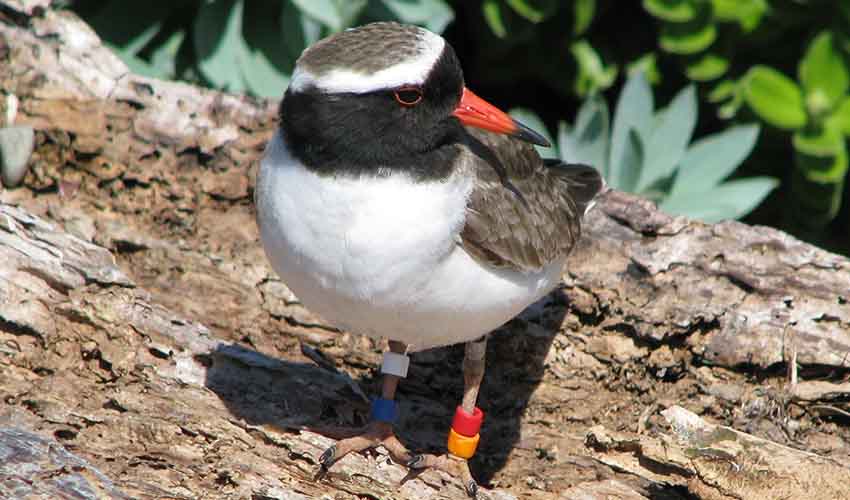


Shore plover
One of the rarest shorebirds on Earth

