Xenopirostris
Their thick, pale bluish bill works like a pry bar for probing cracks and lifting bark edges
They are medium-sized, sturdy birds with strong, pale bluish bills that immediately catch the eye. These bills are thick, slightly hooked, and powerful—perfect tools for the kind of hunting these birds specialize in. Because of that bill shape, the genus is sometimes known as the “sickle-billed vangas,” though they are not to be confused with the even more dramatic sickle-billed species in other genera.
The three members of Xenopirostris—the Lafresnaye’s vanga, Van Dam’s vanga, and Pollen’s vanga—are all found only in Madagascar. Like many Malagasy birds, they are highly specialized and restricted to particular habitats. Rather than living everywhere across the island, each species occupies its own slice of forest, often in dry or semi-dry regions. These vangas tend to prefer deciduous woodland and scrubby forest rather than the lush rainforests that tourists often imagine when they think of Madagascar.
What unites Xenopirostris species most clearly is their feeding style. These birds are classic “bark specialists.” Instead of flitting from leaf to leaf like flycatchers, they spend much of their time examining trunks and larger branches, using their strong bills to pry, probe, and chip at bark. Hidden insects, larvae, and spiders that are tucked into cracks become easy targets for a bird equipped with such a tool.
In appearance, Xenopirostris vangas are handsome without being flashy. Most have dark heads, pale or grayish bodies, and that distinctive pale bill that stands out against their plumage. Subtle differences in head patterns, wing color, and overall tone help separate the three species, but they share a family resemblance that makes them instantly recognizable as members of the same group. Their voices, too, are important. Each species has its own set of calls—often harsh or nasal notes used to keep in contact with mates or small flocks as they move through the trees.

Species in this genus
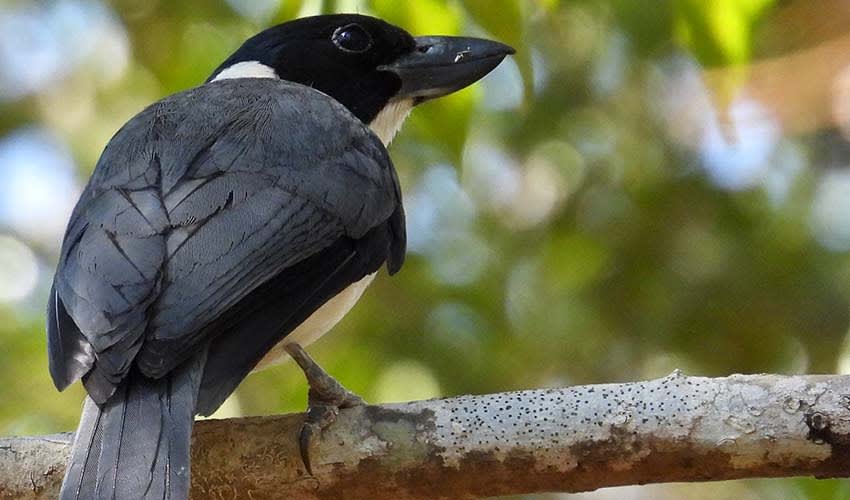


Van Dam’s vanga
One of those birds you can’t “just see somewhere else”

