


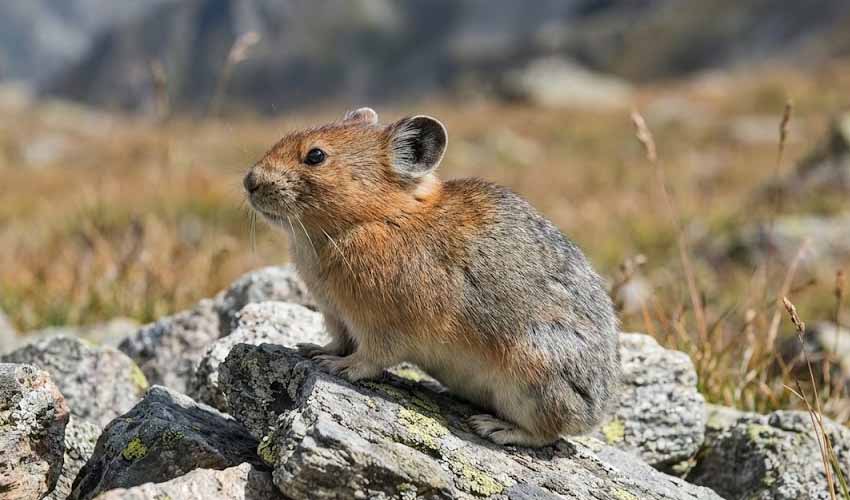
A tiny, round-bodied animal that looks a bit like a rabbit that forgot to grow a tail and decided to live in the mountains. It has short legs, a compact shape, and small, rounded ears, giving it a soft, “button-eared” look rather than the long-eared style people expect from rabbit relatives. Its fur can show warm, rusty tones—hence “red”—often mixed with gray or brown depending on the season and the local landscape. Instead of hopping across open ground like a rabbit, a pika tends to scurry and dart, hugging rocks and low plants as it moves.
Pikas as a group are famous for living in harsh, chilly environments and for being active in the daytime, but different species specialize in different micro-homes: some are “rock lovers” that spend their days in talus slopes (piles of broken rock), while others are more tied to meadows and thick plant cover. The Chinese red pika is especially associated with rugged, high-country terrain, where quick access to shelter matters. Its small ears and compact body help reduce heat loss in cold air, and its dense fur acts like a built-in jacket. Compared with larger rabbit relatives, it’s also built for short, rapid dashes—perfect for weaving between stones and vanishing into narrow gaps when a hawk’s shadow passes overhead.
Another trait that separates pikas from rabbits—and makes the Chinese red pika feel unique—is how it handles food and seasons. Many people are surprised to learn that pikas don’t hibernate. Instead, they prepare. During warmer months, a pika collects plants and dries them into “hay piles,” basically creating little pantries of stored greenery to survive long winters when fresh food is scarce. This is not just casual snacking; it’s careful planning. The pika grabs mouthfuls of vegetation, carries it to a safe spot, and spreads it out to dry so it won’t rot.
Distribution
 China
ChinaAnything we've missed?
Help us improve this page by suggesting edits. Glory never dies!
Suggest an editGet to know me
Terrestrial / Aquatic
Altricial / Precocial
Polygamous / Monogamous
Dimorphic (size) / Monomorphic
Active: Diurnal / Nocturnal
Social behavior: Solitary / Pack / Herd
Diet: Carnivore / Herbivore / Omnivore / Piscivorous / Insectivore
Migratory: Yes / No
Domesticated: Yes / No
Dangerous: Yes / No




