


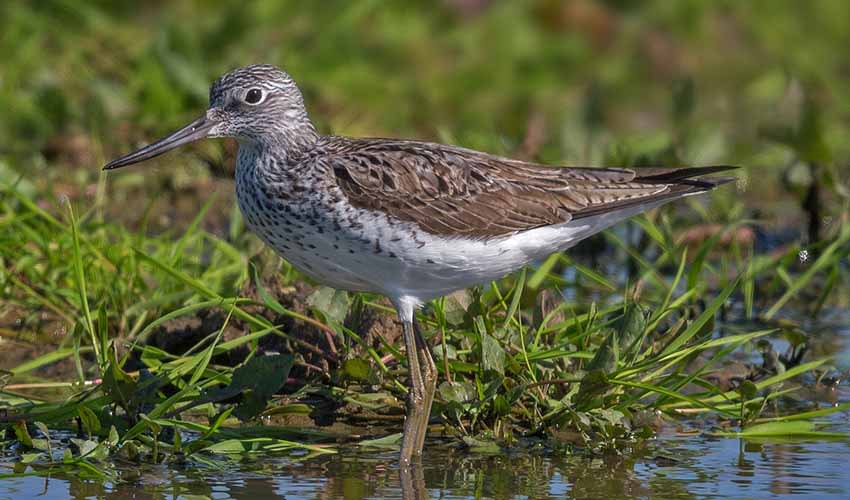
While it shares a similar silhouette with its cousin, the Redshank, you can tell them apart instantly by their footwear—the greenshank, as its name suggests, sports long, sturdy legs in a sophisticated shade of willow-green. Physically, they are built like a high-performance aircraft: sleek, slender, and slightly larger than most other sandpipers. Their most distinguishing feature is their long, heavy bill that has a very subtle upward curve. This “upturned” look gives them a permanent expression of curiosity and serves as a specialized tool for their unique hunting style.
Unlike many of its relatives that quietly probe the mud, the greenshank is a high-energy “pursuit hunter.” If you see a shorebird sprinting through shallow water with its wings partially open, it’s likely a Greenshank. They are famous for their “dash-and-grab” technique, where they literally chase down small fish and shrimp. Because their bills are slightly curved up, they can use them like a shallow scoop as they run, snatching prey right off the surface of the water. This active, almost frantic hunting style makes them much more dynamic to watch than the slower, more methodical probers.
One of the coolest things about the greenshank is its “musical” reputation. They are known for having one of the most melodic and recognizable calls in the marsh—a loud, clear, three-note whistle that sounds like “teu-teu-teu.” It has a haunting, flute-like quality that carries for long distances over open water. In the bird world, they are the “heralds” of the wetlands; because they are quite shy and wary, they are usually the first birds to spot a predator (or a human) and give a loud alarm call, warning every other creature in the area to stay alert.
Distribution
 Afghanistan
 Albania
 Algeria
 Angola
 Armenia
 Australia
 Austria
 Azerbaijan
 Bahrain
 Bangladesh
 Barbados
 Belarus
 Belgium
 Benin
Benin Bermuda
 Bhutan
 Bosnia And Herz.
 Botswana
 British Indian T.
 Brunei
 Bulgaria
 Burkina Faso
 Burundi
 Cambodia
 Cameroon
 Canada
 Cape Verde
 Central Af. Rep.
 Chad
Chad China
China Christmas Island
 Cocos Is. (Keeling)
 Comoros
 Congo-Brazzaville
 Croatia
 Cyprus
 Czechia
 Côte D’ivoire
 DR Congo (Kinshasa)
 Denmark
 Djibouti
 East Timor
 Egypt
Egypt Equatorial Guinea
 Eritrea
 Estonia
 Eswatini
 Ethiopia
 Faroe Islands
 Finland
 France
 French Southern T.
 Gabon
Gabon Gambia
 Georgia
 Germany
 Ghana
Ghana Greece
 Guam
Guam Guinea-Bissau
 Guinea
 Hong Kong
 Hungary
 Iceland
 India
India Indonesia
 Iran
Iran Iraq
Iraq Ireland
 Israel
 Italy
Italy Japan
Japan Jordan
 Kazakhstan
 Kenya
Kenya Korea
Korea Kuwait
 Kyrgyzstan
 Laos
Laos Latvia
 Lebanon
 Lesotho
 Liberia
 Libya
Libya Liechtenstein
 Luxembourg
 Madagascar
 Malawi
 Malaysia
 Maldives
 Mali
Mali Malta
Malta Mauritania
 Mauritius
Mayotte
Mauritius
Mayotte Micronesia
 Moldova
 Mongolia
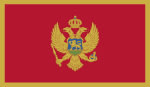 Montenegro
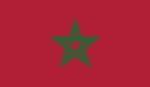 Morocco
 Mozambique
 Myanmar
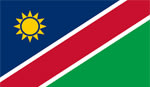 Namibia
 Nepal
Nepal Netherlands
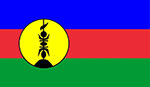 New Caledonia
 New Zealand
 Niger
Niger Nigeria
 Nort. Mariana Is.
 North Korea
 North Macedonia
 Norway
 Oman
Oman Pakistan
 Palau
Palau Papua New Guinea
 Philippines
 Poland
 Portugal
 Puerto Rico
 Qatar
Qatar Romania
 Russia
 Rwanda
Réunion
Rwanda
Réunion Saudi Arabia
 Senegal
 Serbia
 Seychelles
 Sierra Leone
 Singapore
 Slovakia
 Slovenia
 Solomon Islands
 Somalia
 South Africa
 South Sudan
 Spain
Spain Sri Lanka
 Sudan
Sudan Sweden
 Switzerland
 Syria
Syria São Tomé & Príncipe
 Taiwan
 Tajikistan
 Tanzania
 Thailand
 Togo
Togo Tunisia
 Turkmenistan
 Turkey
 UAE
UAE Uganda
 Ukraine
 United Kingdom
 United States
 Uzbekistan
 Vietnam
 Yemen
Yemen Zambia
 Zimbabwe
Anything we've missed?
Help us improve this page by suggesting edits. Glory never dies!
Suggest an editGet to know me
Terrestrial / Aquatic
Altricial / Precocial
Polygamous / Monogamous
Dimorphic (size) / Monomorphic
Active: Diurnal / Nocturnal
Social behavior: Solitary / Pack / Flock
Diet: Carnivore / Herbivore / Omnivore / Piscivorous / Insectivore
Migratory: Yes / No
Domesticated: Yes / No
Dangerous: Yes / No




