


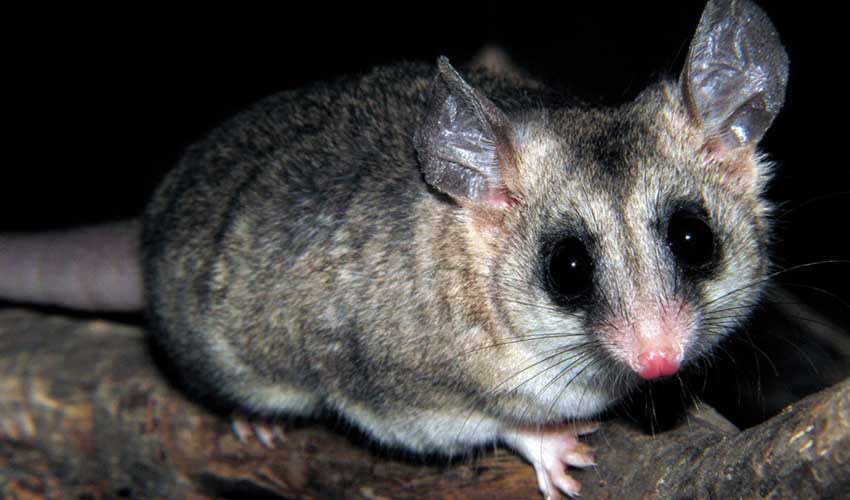
The elegant fat-tailed mouse opossum (Thylamys elegans) is a charming and resilient little marsupial native to Chile and parts of western Argentina, known for its delicate appearance, agile movements, and remarkable ability to survive in harsh, dry environments. As its name suggests, this species belongs to the fat-tailed mouse opossums (genus Thylamys), small members of the marsupial family Didelphidae—relatives of the better-known opossums of the Americas. The word “elegant” in its name couldn’t be more fitting: with its sleek fur, alert black eyes, and neatly rounded body, Thylamys elegans has an appearance and poise that set it apart among South America’s small mammals.
Physically, the elegant fat-tailed mouse opossum is tiny and graceful. Its fur is soft and fine, usually grayish or brownish on the back and pale cream or white underneath, providing excellent camouflage in rocky or shrubby landscapes. The most distinctive feature, however, is its fat-storing tail, which becomes thick and rounded when food is plentiful. This fatty reserve acts as a built-in energy store, allowing the opossum to survive periods of scarcity or cold, especially during winter. When resources are limited, the tail becomes noticeably thinner as the animal uses up its stored fat. Its large, dark eyes reflect its nocturnal lifestyle, while its small, pointed muzzle and sensitive whiskers help it detect insects and fruits in the dark.
The elegant fat-tailed mouse opossum inhabits dry forests, scrublands, rocky hills, and thorny shrublands—habitats that stretch across central and northern Chile and into the Andean foothills of Argentina. It is most active at night, spending its waking hours foraging for insects, fruits, seeds, and small invertebrates. It is an omnivore, capable of adapting its diet seasonally to what’s available, which is one reason for its wide distribution and success in variable climates.
Distribution
 Chile
ChileAnything we've missed?
Help us improve this page by suggesting edits. Glory never dies!
Suggest an editGet to know me
Terrestrial / Aquatic
Altricial / Precocial
Polygamous / Monogamous
Dimorphic (size) / Monomorphic
Active: Diurnal / Nocturnal
Social behavior: Solitary / Pack / Herd
Diet: Carnivore / Herbivore / Omnivore / Piscivorous / Insectivore
Migratory: Yes / No
Domesticated: Yes / No
Dangerous: Yes / No




