


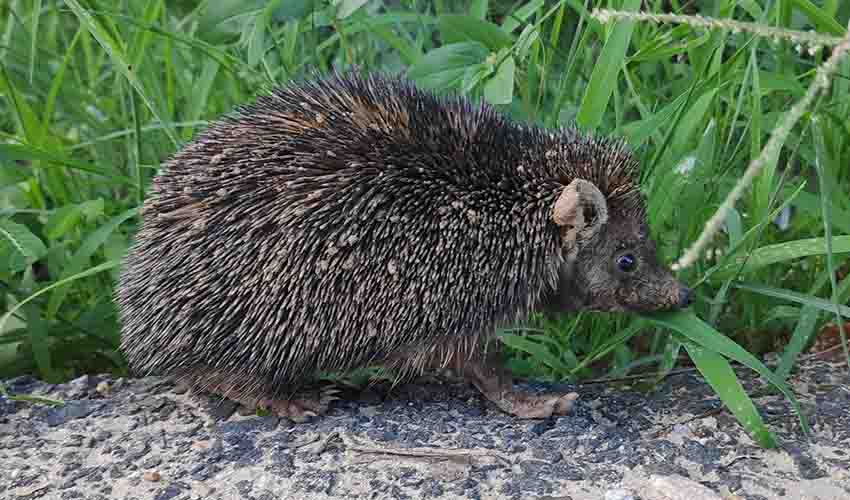
Those large, upright ears are its signature feature, giving it an alert, wide-awake expression even when it’s trying to stay hidden. Living in dry, open habitats across parts of the Indian subcontinent, it’s built for warm nights and wide spaces. Its back is covered in stiff spines that form a protective shield, while the face and belly stay soft and furry. The spines often blend into the sandy or brownish ground, helping it disappear in scrub and grass, and its pointed nose is always active, sniffing for anything edible.
What really distinguishes the Indian long-eared hedgehog from other hedgehogs is how those big ears fit into its lifestyle. In hot environments, large ears can help an animal shed heat, and they also work like sound collectors, picking up tiny movements—an insect crawling, a lizard shifting, a predator stepping on dry leaves. That extra “hearing power” is a huge advantage for a small animal that spends much of its life on the ground. Compared with rounder, heavier hedgehogs from cooler climates, this species tends to look more lightly built and agile, with a practical body shape that helps it cover open terrain without overheating.
Like most hedgehogs, it’s mainly active during the cooler hours, usually at night. As it forages, it moves with a steady trot, pausing often to sniff and listen, then making short, decisive digs or pounces when it finds prey. Insects are a major part of the menu—beetles, termites, and other small crawlies—but it can also eat other bite-sized animals it can catch and may nibble on bits of plant food when available. Its diet is flexible, which matters in dry places where food can be unpredictable. During the day, it rests in sheltered spots: under bushes, in rock crevices, or in shallow scrapes and burrows that offer shade and safety.
Distribution
 India
India Pakistan
Anything we've missed?
Help us improve this page by suggesting edits. Glory never dies!
Suggest an editGet to know me
Terrestrial / Aquatic
Altricial / Precocial
Polygamous / Monogamous
Dimorphic (size) / Monomorphic
Active: Diurnal / Nocturnal
Social behavior: Solitary / Pack / Herd
Diet: Carnivore / Herbivore / Omnivore / Piscivorous / Insectivore
Migratory: Yes / No
Domesticated: Yes / No
Dangerous: Yes / No




